 ChipApex | Global Electronic Components Supplier
SEARCH
Search Product
Search Post
— IC芯片 | 连接器 | 传感器 | 被动器件 —
Search productSearch post
— IC芯片 | 连接器 | 传感器 | 被动器件 —
Consult the customer manager about the wholesale price.
consultation hotline:86-132-6715-2157
email:[email protected]
Contact the product manager for consultation. One-stop consultation is available.
Do you want a lower wholesale price? Please send us your inquiry and we will reply immediately.
The Renesas Electronics Corporation 2309A-1DCGI8 is a zero-delay clock buffer IC designed for high-speed clock distribution applications. It operates within a frequency range of 10 MHz to 133 MHz and accepts a single LVTTL input, distributing the signal to nine outputs across two banks (four and five outputs). The device utilizes an on-chip Phase-Locked Loop (PLL) to achieve zero delay between the reference input and output clocks. It functions on a 3V to 3.6V supply voltage and is housed in a 16-pin SOIC package with a width of 3.90 mm. The component supports industrial temperature ranges from -40°C to 85°C.
Verify the specific suffix 'I' indicates the industrial temperature grade (-40°C to 85°C) compared to commercial variants. Confirm the 'G' suffix denotes RoHS compliance and lead-free status. Ensure the '8' suffix corresponds to the tape-and-reel packaging format. Cross-reference the manufacturer part number with distributor codes such as IDT2309A-1DCGI8 to ensure accurate sourcing.
Select this component when a single reference clock must be distributed to multiple destinations with minimal skew. The 2309A-1 variant provides standard drive strength; choose the -1H version if higher drive current or faster rise/fall times are required. Verify that the system power supply remains within the 3V to 3.6V range. Ensure the PCB layout accommodates the 16-SOIC package dimensions of 9.9 x 3.9 x 1.5 mm.
The 2309A series belongs to the broader family of zero-delay buffers derived from ICS proprietary PLL technology. It serves as a 16-pin expansion of the 8-pin 2305A series, offering increased fan-out capability. The device is manufactured by Renesas Electronics Corporation, having originated from Integrated Device Technology (IDT) product lines. It is characterized for both commercial and industrial temperature operations.
The PL123-09SC-R from Microchip Technology is documented as a similar replacement option. Verify electrical compatibility regarding supply voltage, input/output logic levels, and package footprint before substitution. Check for differences in jitter specifications and drive strength between the original and substitute parts.
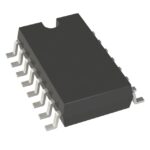 2309A-1DCGI8
The activity of extra discounts on wholesale prices is in full swing…
Please fill in your contact information and we will send you the latest wholesale price list.





