ChipApex | Global Electronic Components Supplier

SEARCH
Search Product
Search Post
— IC芯片 | 连接器 | 传感器 | 被动器件 —
Search productSearch post
— IC芯片 | 连接器 | 传感器 | 被动器件 —
Consult the customer manager about the wholesale price.
consultation hotline:86-132-6715-2157
email:[email protected]
Contact the product manager for consultation. One-stop consultation is available.
Do you want a lower wholesale price? Please send us your inquiry and we will reply immediately.
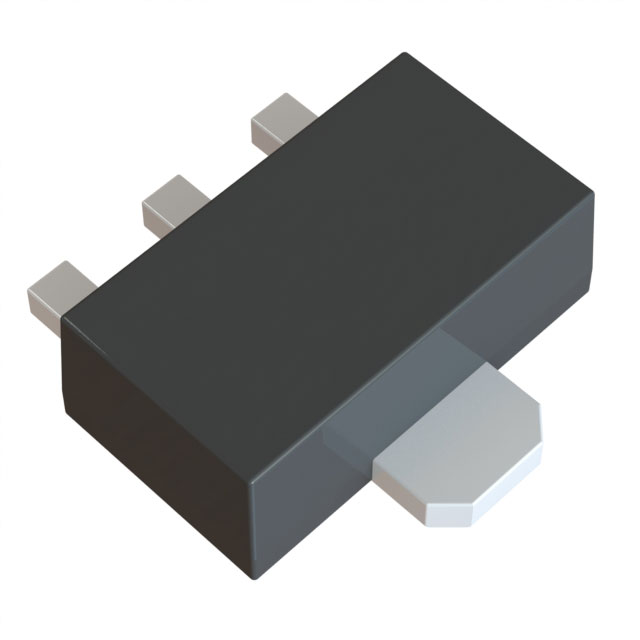
2SA1213-O-AP is listed in the Single Bipolar Transistors range at ChipApex. The manufacturer field lists MCC (Micro Commercial Components). Its product description is TRANS PNP 50V 2A SOT-89. Review the specifications below when checking this part for your BOM.
The 2SA1213-O-AP is a PNP silicon epitaxial transistor manufactured by Micro Commercial Components. It features a collector-emitter voltage of -50 V and a collector current rating of -0.5 A. The device dissipates up to 500 mW at 25°C, rising to 1000 mW on a ceramic substrate. Operating junction temperature ranges from -55°C to +150°C. DC current gain (hFE) varies between 70 and 240 depending on the suffix variant. Transition frequency reaches 100 MHz typical.
Verify authenticity through authorized MCC distributors or direct purchase to avoid counterfeit components. Confirm specific hFE binning requirements match the O or Y suffix variants. Ensure thermal management aligns with the specified derating curves for ambient temperatures exceeding 25°C. Check halogen-free availability if required by project specifications.
Select this component for medium-power PNP switching tasks requiring low saturation characteristics. Consider the SOT-89 package for its thermal performance relative to smaller packages. Evaluate the transition frequency against signal speed requirements. Verify that the collector current limits accommodate peak load demands without exceeding safe operating area boundaries.
This transistor belongs to the 2SA1213 series, designed as a complementary counterpart to NPN types like the 2SC2873. It utilizes a PNP silicon epitaxial planar structure housed in an SOT-89 plastic envelope. The device is optimized for applications demanding reliable switching performance within standard industrial temperature ranges.
Direct substitutes include the 2SA1296, 2SA1297, 2SA1315, 2SA1428, 2SA1680, and 2SA1734. These alternatives share similar power amplifier and switching functionalities. Verify pinout compatibility and electrical parameter overlaps before implementation.
The maximum collector-emitter breakdown voltage (V(BR)CEO) is -50 V.
Power dissipation increases from 500 mW to 1000 mW when mounted on a ceramic substrate compared to free-air conditions.
The transition frequency (fT) is typically 100 MHz under standard test conditions.
Explore related parts through Bipolar (BJT), Transistors, Discrete Semiconductor Products, all product categories.
 2SA1213-O-AP

The activity of extra discounts on wholesale prices is in full swing…
Please fill in your contact information and we will send you the latest wholesale price list.