ChipApex | Global Electronic Components Supplier
SEARCH
Search Product
Search Post
— IC芯片 | 连接器 | 传感器 | 被动器件 —
Search productSearch post
— IC芯片 | 连接器 | 传感器 | 被动器件 —
Consult the customer manager about the wholesale price.
consultation hotline:86-132-6715-2157
email:[email protected]
Contact the product manager for consultation. One-stop consultation is available.
Do you want a lower wholesale price? Please send us your inquiry and we will reply immediately.
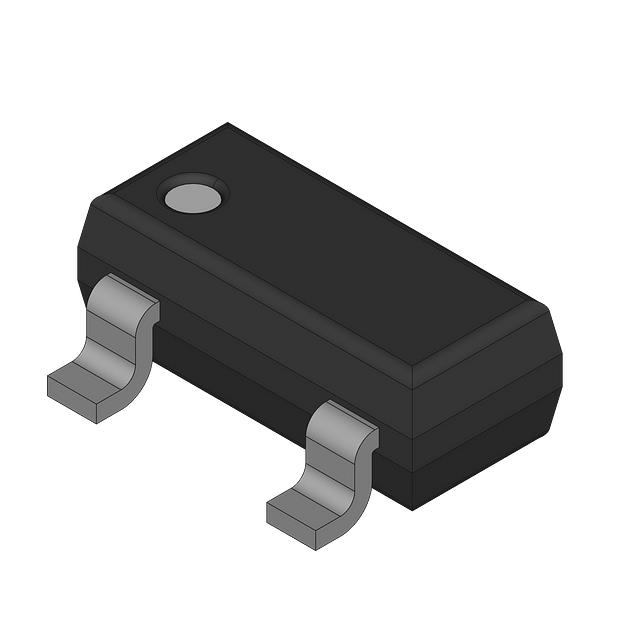
The onsemi 2SA1519-TB-E is a PNP epitaxial planar silicon transistor designed for high-speed switching applications. It features a maximum collector-emitter voltage of -50V and a continuous collector current of -150mA, with a power dissipation rating of 200mW. The device operates within a junction temperature range up to 150°C and utilizes a compact SOT-23 (TO-236-3) surface-mount package. Key electrical characteristics include a DC current gain (hFE) of at least 100 at Ic=-10mA and Vce=-5V, and a transition frequency (fT) of 180MHz. This component is RoHS3 compliant and suitable for general-purpose amplification and switching tasks in consumer electronics.
Verify the specific suffix 'TB-E' against the official onsemi datasheet to confirm pinout and marking consistency. Ensure that any substitute components maintain identical package dimensions and thermal characteristics. Confirm RoHS3 compliance status directly from the manufacturer's latest documentation before finalizing procurement specifications.
Select this component when a small-form-factor PNP transistor is required for low-power switching or amplification. The 150mA current limit and 200mW power dissipation define its operational boundaries. Consider the 180MHz transition frequency for signal integrity in moderate-frequency applications. Verify thermal management requirements for the SOT-23 package under continuous load conditions.
The 2SA1519 belongs to onsemi's lineup of general-purpose bipolar junction transistors. It serves as a standard replacement for legacy PNP devices in consumer electronics and industrial control systems. The SOT-23 packaging allows for automated assembly and reduced board space compared to through-hole alternatives. It complements NPN counterparts in push-pull amplifier configurations.
Direct substitutes must match the -50V Vceo, -150mA Ic, and SOT-23 package. Verify hFE binning and fT specifications to ensure equivalent switching performance. Check for identical pinout assignments to prevent circuit modification during replacement.
 2SA1519-TB-E
The activity of extra discounts on wholesale prices is in full swing…
Please fill in your contact information and we will send you the latest wholesale price list.