ChipApex | Global Electronic Components Supplier

SEARCH
Search Product
Search Post
— IC芯片 | 连接器 | 传感器 | 被动器件 —
Search productSearch post
— IC芯片 | 连接器 | 传感器 | 被动器件 —
Consult the customer manager about the wholesale price.
consultation hotline:86-132-6715-2157
email:[email protected]
Contact the product manager for consultation. One-stop consultation is available.
Do you want a lower wholesale price? Please send us your inquiry and we will reply immediately.
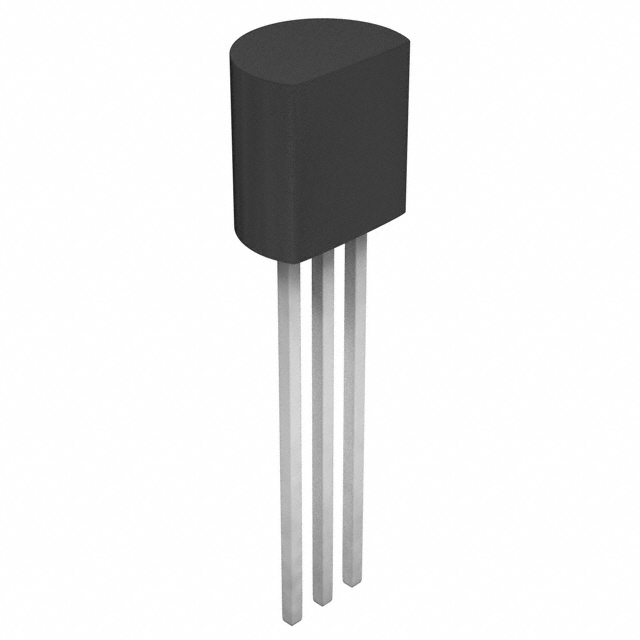
2SC2235-Y,T6F(J is listed in the Single Bipolar Transistors range at ChipApex. The manufacturer field lists Toshiba Semiconductor and Storage. Its product description is TRANS NPN 120V 0.8A TO-92MOD. Review the specifications below when checking this part for your BOM.
The Toshiba 2SC2235 is a silicon NPN epitaxial transistor designed for audio power and driver stage amplifier applications. It features a collector-emitter breakdown voltage of 120 V, a maximum collector current of 800 mA, and a collector power dissipation of 900 mW at 25°C. The device exhibits a transition frequency of 120 MHz and a DC current gain ranging from 80 to 240 depending on the classification code. It utilizes a JEDEC TO-92MOD package with a junction temperature rating of 150 °C.
Verify RoHS compatibility status directly with Toshiba sales representatives, as environmental compliance varies by production lot. Confirm the specific hFE classification suffix (O or Y) required for your circuit design, as this dictates the minimum DC current gain threshold. Ensure the ordering part number matches the exact marking requirements for your assembly process.
Select the appropriate hFE binning code based on the required gain consistency for your amplifier topology. Evaluate the thermal management strategy carefully, as the 900 mW dissipation limit in the TO-92MOD package requires adequate heat sinking for continuous high-current operation. Verify that the 120 V breakdown voltage meets the peak voltage swings expected in the target application.
This component belongs to Toshiba's discrete bipolar transistor lineup utilizing the PCT (Process for Complementary Transistors) technology. This manufacturing process ensures matched electrical characteristics between complementary NPN and PNP devices, facilitating balanced push-pull configurations in audio output stages without requiring extensive external matching components.
The datasheet explicitly identifies the 2SA965 as the complementary counterpart. No other direct substitute part numbers are documented within the provided official specifications.
Explore related parts through Bipolar (BJT), Transistors, Discrete Semiconductor Products, all product categories.
 2SC2235-Y,T6F(J

The activity of extra discounts on wholesale prices is in full swing…
Please fill in your contact information and we will send you the latest wholesale price list.