 ChipApex | Global Electronic Components Supplier

SEARCH
Search Product
Search Post
— IC芯片 | 连接器 | 传感器 | 被动器件 —
Search productSearch post
— IC芯片 | 连接器 | 传感器 | 被动器件 —
Consult the customer manager about the wholesale price.
consultation hotline:86-132-6715-2157
email:[email protected]
Contact the product manager for consultation. One-stop consultation is available.
Do you want a lower wholesale price? Please send us your inquiry and we will reply immediately.
2SD2129,LS4ALPSQ(M is listed in the Single Bipolar Transistors range at ChipApex. The manufacturer field lists Toshiba Semiconductor and Storage. Its product description is TRANS NPN 100V 3A TO-220NIS. Review the specifications below when checking this part for your BOM.
The Toshiba 2SD2129 is a silicon NPN triple diffused Darlington transistor designed for high-power switching applications. It features a collector-emitter voltage of 100 V and a continuous collector current rating of 3 A, with a pulse current capacity of 5 A. The device provides a minimum DC current gain (hFE) of 1000 at 3 A and maintains a low saturation voltage of 2.0 V maximum under full load conditions. Packaged in the SC-67 flange mount configuration, it offers a collector power dissipation of 20 W at 25°C case temperature.
Verify RoHS compatibility status directly with the manufacturer or authorized distributor, as the datasheet indicates this requires specific product-by-product confirmation. Ensure the ordering suffix matches the required lead-free finish if applicable. Confirm that the SC-67 package dimensions align with the target PCB footprint and thermal management requirements before finalizing procurement.
Select this component when high current gain and low saturation voltage are critical for driving loads such as hammers or motors. The 100 V breakdown voltage supports standard industrial control voltages. Consider the SC-67 package for effective heat sinking, as the collector connects to the mounting base. Evaluate the safe operating area curves to ensure reliability under varying thermal conditions and duty cycles.
This part belongs to Toshiba's line of silicon NPN Darlington transistors. It utilizes a triple diffused process to achieve high current handling capabilities. The device is intended for general electronics applications but is not recommended for safety-critical systems like medical or transportation equipment without additional design safeguards.
No public confirmed substitute part numbers are documented in the provided source material.
Explore related parts through Bipolar (BJT), Transistors, Discrete Semiconductor Products, all product categories.
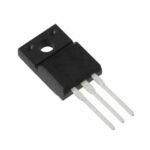 2SD2129,LS4ALPSQ(M

The activity of extra discounts on wholesale prices is in full swing…
Please fill in your contact information and we will send you the latest wholesale price list.





