ChipApex | Global Electronic Components Supplier
SEARCH
Search Product
Search Post
— IC芯片 | 连接器 | 传感器 | 被动器件 —
Search productSearch post
— IC芯片 | 连接器 | 传感器 | 被动器件 —
Consult the customer manager about the wholesale price.
consultation hotline:86-132-6715-2157
email:[email protected]
Contact the product manager for consultation. One-stop consultation is available.
Do you want a lower wholesale price? Please send us your inquiry and we will reply immediately.
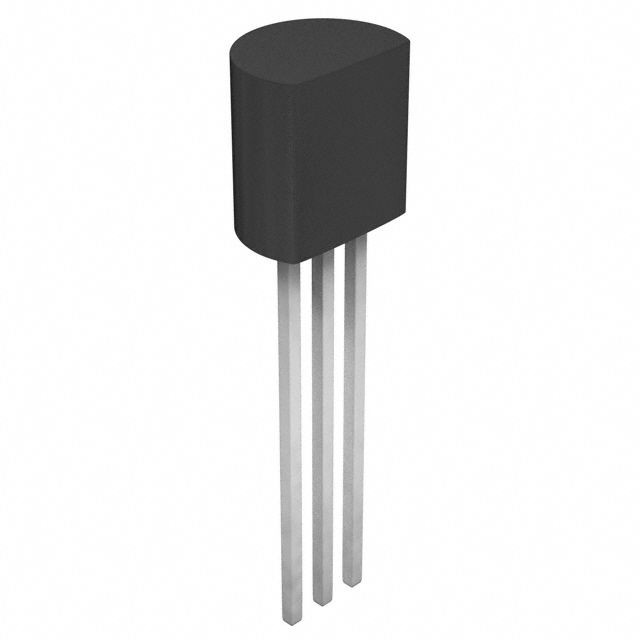
The Toshiba 2SK2989 is a silicon N-channel MOS field-effect transistor utilizing π-MOSVI technology, designed for chopper regulators, DC-DC converters, and motor drives. It features a low drain-source ON resistance of 120 mΩ (typical) at VGS = 10 V and ID = 2.5 A, alongside a high forward transfer admittance of 2.6 S. The device operates with a gate threshold voltage between 1.0 V and 2.2 V and supports a maximum drain current of 5 A continuous or 15 A pulse. Packaged in a TO-92MOD format, it provides robust thermal performance with a channel-to-ambient thermal resistance of 138 °C/W.
Verify the specific ordering suffix against the manufacturer's documentation to confirm environmental compliance status, such as RoHS compatibility. Confirm that the package marking aligns with the intended lot number indication requirements. Ensure the design accounts for the absolute maximum ratings regarding channel temperature and power dissipation limits during procurement planning.
Select this component when a low RDS(ON) value is required for improved efficiency in power switching applications. Consider the 50 V breakdown voltage and 5 A continuous current capability for appropriate load matching. Evaluate the thermal resistance characteristics to ensure adequate heat dissipation within the specified operating temperature range without exceeding the 150°C channel temperature limit.
This part belongs to the Toshiba discrete semiconductor portfolio, specifically categorized under silicon N-channel MOSFETs. It is engineered using the company's proprietary π-MOSVI process technology. The device is distinct from general-purpose logic transistors due to its optimized power handling capabilities and specific electrical parameters tailored for power conversion and control circuits.
Consult official Toshiba documentation for verified substitute part numbers. Cross-referencing requires matching critical parameters such as breakdown voltage, current rating, and package type to ensure functional equivalence in the target circuit design.
 2SK2989(T6CANO,A,F
The activity of extra discounts on wholesale prices is in full swing…
Please fill in your contact information and we will send you the latest wholesale price list.