 ChipApex | Global Electronic Components Supplier
SEARCH
Search Product
Search Post
— IC芯片 | 连接器 | 传感器 | 被动器件 —
Search productSearch post
— IC芯片 | 连接器 | 传感器 | 被动器件 —
Consult the customer manager about the wholesale price.
consultation hotline:86-132-6715-2157
email:[email protected]
Contact the product manager for consultation. One-stop consultation is available.
Do you want a lower wholesale price? Please send us your inquiry and we will reply immediately.
The Si501JBL-ABAG is a precision MEMS oscillator manufactured by Silicon Labs, designed for high-performance timing applications requiring low phase noise and jitter. This specific model operates at a frequency of 245.76 MHz with an output tolerance of ±50 ppm. It utilizes the Si501 family architecture, which integrates a voltage-controlled crystal oscillator (VCXO) core with digital calibration to ensure stability across varying environmental conditions. The device supports LVCMOS output levels and is housed in a compact 3225 package, making it suitable for space-constrained designs.
Verify the exact part number suffix against the manufacturer's current datasheet to confirm pinout compatibility and output voltage levels. Ensure that the operating temperature range specified in the procurement requirements matches the component's rated specifications. Cross-reference the orderable part number with the official Silicon Labs catalog to avoid discrepancies in packaging or revision history before finalizing purchase orders.
Select this component when precise frequency control and low jitter are critical for signal integrity in high-speed digital interfaces. Consider the required output swing and load capacitance to ensure compatibility with the target circuit. Evaluate the need for VCXO capabilities if frequency modulation or tuning is required within the system design constraints.
This oscillator belongs to the Si501 series, which represents Silicon Labs' advanced MEMS-based timing solutions. The series is known for replacing traditional quartz crystals with more robust and scalable alternatives. The Si501JBL variant specifically targets applications demanding stable clock signals with minimal phase error, leveraging proprietary MEMS technology for enhanced reliability compared to conventional oscillators.
Consult the official Silicon Labs replacement guide for direct equivalents. Verify pin-to-pin compatibility and electrical parameter alignment with any substitute components. Ensure that alternative parts meet the same frequency tolerance and phase noise requirements to maintain system performance.
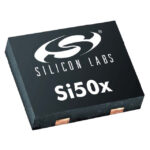 501JBL-ABAG
The activity of extra discounts on wholesale prices is in full swing…
Please fill in your contact information and we will send you the latest wholesale price list.




