 ChipApex | Global Electronic Components Supplier
SEARCH
Search Product
Search Post
— IC芯片 | 连接器 | 传感器 | 被动器件 —
Search productSearch post
— IC芯片 | 连接器 | 传感器 | 被动器件 —
Consult the customer manager about the wholesale price.
consultation hotline:86-132-6715-2157
email:[email protected]
Contact the product manager for consultation. One-stop consultation is available.
Do you want a lower wholesale price? Please send us your inquiry and we will reply immediately.
The Texas Instruments part number 5962-8688802DA is a military-grade quadruple 2-input positive-NAND buffer and driver. It belongs to the SN54ALS1000A series, utilizing Advanced Low-Power Schottky (ALS) TTL technology to achieve high-speed operation with reduced power consumption. The device features four independent NAND gates, each providing two inputs. Designed for harsh environments, it operates within an extended temperature range of -55°C to +125°C and supports a supply voltage range of 4.75 V to 5.25 V. Typical propagation delay is 13 ns at 5 V, with a typical low-level output current of 24 mA and high-level output current of -8 mA.
Verify the specific suffix DA against the manufacturer's official datasheet to confirm pinout compatibility and packaging details. Ensure that the procurement channel provides traceability documentation suitable for military or aerospace specifications. Confirm RoHS status and lead times directly with authorized distributors, as availability for this specific military variant may be limited.
Select this component when designing systems that require the speed of ALS technology combined with the power efficiency improvements over standard TTL. It is appropriate for applications needing four independent NAND functions in a single package. Consider the CPAK-16 package constraints during PCB layout. Verify that the system power supply remains strictly within the 4.75 V to 5.25 V range to ensure correct logic levels.
This part is a military version of the commercial SN54ALS1000A quad NAND buffer. The 5962 prefix indicates it is a direct-from-drawings (DFD) part manufactured to MIL-SPEC requirements. It serves as a drop-in replacement for other military-grade ALS NAND buffers in legacy defense electronics, offering improved performance over older SSI logic families.
Compatible substitutes include other military-grade ALS quad NAND buffers such as the SN54ALS1000A in equivalent military packaging. Verify pin-to-pin compatibility before substitution. Alternative technologies like FET Logic (FEL) or CMOS may offer lower power but different speed characteristics.
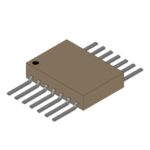 5962-8688802DA
The activity of extra discounts on wholesale prices is in full swing…
Please fill in your contact information and we will send you the latest wholesale price list.





