 ChipApex | Global Electronic Components Supplier
SEARCH
Search Product
Search Post
— IC芯片 | 连接器 | 传感器 | 被动器件 —
Search productSearch post
— IC芯片 | 连接器 | 传感器 | 被动器件 —
Consult the customer manager about the wholesale price.
consultation hotline:86-132-6715-2157
email:[email protected]
Contact the product manager for consultation. One-stop consultation is available.
Do you want a lower wholesale price? Please send us your inquiry and we will reply immediately.
The National Semiconductor 5962-9076501M2A is a military-grade, high-speed CMOS quad bus transceiver belonging to the SN74ACTQ series. It features four independent bidirectional data channels with three-state outputs and active pull-up resistors on all output pins. The device operates within a supply voltage range of 2.7 V to 3.6 V and supports a maximum clock frequency of 100 MHz. It utilizes a 20-pin ceramic dual in-line package (CDIP) designed for high reliability in harsh environments, offering low power consumption and fast propagation delays suitable for memory and microprocessor systems.
Verify authenticity through authorized defense contractors or certified distributors due to the component's military specification status. Request full traceability documentation including lot codes and material certifications. Confirm that the CDIP-20 package matches the required footprint and pin configuration for your specific board design before finalizing acquisition.
Select this component when system requirements demand high-speed data transfer with robust noise immunity in extreme temperature conditions. Ensure the design accommodates the 2.7 V to 3.6 V supply voltage range and accounts for the thermal characteristics of the ceramic package. Verify compatibility with existing logic levels and bus loading constraints in the target application architecture.
This part belongs to the broader family of ACT series logic devices known for combining CMOS low power with TTL-compatible speeds. The 5962 prefix indicates it is a MIL-PRF-38534 qualified product, distinguishing it from commercial variants by stricter screening and reliability standards. It serves as a critical interconnect element in legacy and specialized digital systems requiring proven long-term performance.
Direct replacements include other MIL-qualified quad bus transceivers from the same manufacturer or equivalent parts from Texas Instruments under the SN74ACTQ series. Verify pinout compatibility and electrical specifications such as propagation delay and output drive strength before substitution.
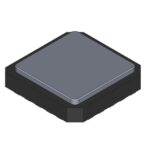 5962-9076501M2A
The activity of extra discounts on wholesale prices is in full swing…
Please fill in your contact information and we will send you the latest wholesale price list.





