 ChipApex | Global Electronic Components Supplier
SEARCH
Search Product
Search Post
— IC芯片 | 连接器 | 传感器 | 被动器件 —
Search productSearch post
— IC芯片 | 连接器 | 传感器 | 被动器件 —
Consult the customer manager about the wholesale price.
consultation hotline:86-132-6715-2157
email:[email protected]
Contact the product manager for consultation. One-stop consultation is available.
Do you want a lower wholesale price? Please send us your inquiry and we will reply immediately.
The Altera 5AGTMC3D3F31I5N is an Arria V GT Field Programmable Gate Array (FPGA) manufactured using a 40nm process technology. This device features 91,680 Adaptive Logic Modules (ALMs) and supports up to 544 user I/Os within an FCBGA-1152 package. It integrates 12.97 Mbit of embedded memory and includes 24 high-speed transceivers capable of data rates up to 10.3125 Gb/s. The core logic operates at a voltage of 1.1V, while the I/O banks support multiple voltage standards. Designed for industrial applications, it functions reliably across a temperature range of -40°C to +100°C.
Verify the specific ordering suffix against the manufacturer's current documentation to ensure compatibility with required speed grades and temperature ranges. Confirm RoHS compliance status and lead times directly with authorized distributors or Intel/Altera sales representatives prior to placement. Ensure design files are compatible with the supported Quartus Prime software versions for this device family.
Select this model when system requirements demand high-speed serial connectivity combined with moderate-to-high logic density. Compare against the Arria V GX series if lower power consumption is prioritized over maximum transceiver speed. Evaluate pin count availability against the 544 I/O limit to ensure sufficient interface expansion without requiring additional bridging components.
This component belongs to the Arria V GT FPGA family, which targets high-performance serial communication applications. It sits between the lower-density Arria V GX devices and the higher-end Stratix V series. The GT variant specifically emphasizes transceiver performance, making it suitable for backplane and board-to-board interconnects requiring multi-gigabit speeds.
Direct replacements may include other Arria V GT devices with similar ALM counts, such as the 5AGTMD3 series. Consider migration to Agilex 5 or Agilex 7 families for future-proofing, though pinout and software compatibility will require significant redesign. Verify end-of-life status with the manufacturer before finalizing substitute selections.
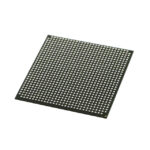 5AGTMC3D3F31I5N
The activity of extra discounts on wholesale prices is in full swing…
Please fill in your contact information and we will send you the latest wholesale price list.






