 ChipApex | Global Electronic Components Supplier
SEARCH
Search Product
Search Post
— IC芯片 | 连接器 | 传感器 | 被动器件 —
Search productSearch post
— IC芯片 | 连接器 | 传感器 | 被动器件 —
Consult the customer manager about the wholesale price.
consultation hotline:86-132-6715-2157
email:[email protected]
Contact the product manager for consultation. One-stop consultation is available.
Do you want a lower wholesale price? Please send us your inquiry and we will reply immediately.
The Altera 5AGXFB3H4F35I3G is an Arria V GX Field Programmable Gate Array (FPGA) designed for high-performance digital logic applications. It features 362,000 logic elements and 17,110 Adaptive Logic Modules (ALMs). The device integrates 19.8 Mbit of embedded memory and supports up to 544 I/Os. Operating at a core voltage of 1.12V to 1.18V, it utilizes a 1152-ball FCBGA package with a 35x35mm footprint. The component supports data rates up to 6.5536 Gb/s via its transceivers and operates within a junction temperature range of -40°C to 100°C.
Verify the specific suffix 'I3G' against official Intel/Altera documentation to confirm commercial grade temperature ratings and RoHS compliance status. Ensure compatibility with the 1152-ball FCBGA footprint during PCB layout. Confirm current availability as this part may be subject to obsolescence or lifecycle changes. Cross-reference pinouts with the latest datasheet revision to avoid integration errors.
Select this model when the design requires approximately 362k logic elements and robust embedded memory. Compare against the 5AGXFB series variants to determine if different speed grades or package options better suit thermal constraints. Verify that the required I/O count does not exceed the 544 limit. Consider the operating temperature range if the environment exceeds standard commercial limits.
This component belongs to the Arria V GX family, which targets cost-sensitive, high-volume applications requiring moderate to high performance. The Arria V series combines ARM Cortex-A9 processor capabilities in some variants, though this specific part focuses on pure FPGA logic. It sits between the lower-end Arria V GT and the higher-end Stratix V families in terms of resource density and transceiver capabilities.
Publicly confirmed direct substitute part numbers are not available in the provided source material. Designers should consult official Intel replacement guides for end-of-life notices. Alternative selections may require re-evaluation of pin compatibility and logic resource requirements.
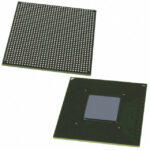 5AGXFB3H4F35I3G
The activity of extra discounts on wholesale prices is in full swing…
Please fill in your contact information and we will send you the latest wholesale price list.





