 ChipApex | Global Electronic Components Supplier
SEARCH
Search Product
Search Post
— IC芯片 | 连接器 | 传感器 | 被动器件 —
Search productSearch post
— IC芯片 | 连接器 | 传感器 | 被动器件 —
Consult the customer manager about the wholesale price.
consultation hotline:86-132-6715-2157
email:[email protected]
Contact the product manager for consultation. One-stop consultation is available.
Do you want a lower wholesale price? Please send us your inquiry and we will reply immediately.
The Altera 5AGXMB3G4F31I3G is a high-performance Stratix V GX field-programmable gate array (FPGA) designed for demanding digital signal processing and high-speed serial communication applications. This device features a dense logic architecture with over 2 million logic elements, providing substantial computational capacity for complex algorithms. It integrates numerous hard processor system interfaces and advanced transceiver blocks capable of operating at multi-gigabit data rates. The component utilizes a 28nm process technology to optimize power efficiency while maintaining high clock speeds. Key specifications include extensive memory resources and dedicated DSP slices for efficient mathematical operations.
Verify the specific suffix codes against official Intel or Altera documentation to ensure correct package type, temperature range, and speed grade. Confirm that the part number matches the exact revision required for your design compatibility. Check for any regional export control classifications or licensing requirements before finalizing procurement orders.
Evaluate the available pin count and I/O voltage levels to ensure compatibility with existing board designs. Consider the thermal management requirements associated with the full logic density and transceiver usage. Compare resource utilization against alternative devices in the Stratix V family to determine if lower-density options suffice for the intended application load.
This component belongs to the Stratix V family, representing a generation of FPGAs focused on balancing high performance with power efficiency. It serves as an evolution from previous generations, offering improved transceiver speeds and integrated processing capabilities. The device targets markets requiring significant parallel processing power alongside flexible programmability for evolving standards.
Direct replacements within the Stratix V family should be verified for pin-to-pin compatibility. Cross-family migration to Agilex or Cyclone series requires schematic redesign due to architectural differences. Consult official migration guides for detailed resource mapping and timing closure strategies when considering alternative components.

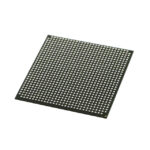 5AGXMB3G4F31I3G
The activity of extra discounts on wholesale prices is in full swing…
Please fill in your contact information and we will send you the latest wholesale price list.



