 ChipApex | Global Electronic Components Supplier

SEARCH
Search Product
Search Post
— IC芯片 | 连接器 | 传感器 | 被动器件 —
Search productSearch post
— IC芯片 | 连接器 | 传感器 | 被动器件 —
Consult the customer manager about the wholesale price.
consultation hotline:86-132-6715-2157
email:[email protected]
Contact the product manager for consultation. One-stop consultation is available.
Do you want a lower wholesale price? Please send us your inquiry and we will reply immediately.
The Altera 5ASXBB5D4F31C4G is a System on Chip (SoC) device belonging to the Arria V SX FPGA family. It integrates a dual-core ARM Cortex-A9 MPCore processor with CoreSight debug capabilities and an embedded FPGA fabric containing 50,000 logic elements. The component operates at a maximum frequency of 925 MHz and includes 64 KB of RAM. It supports peripherals such as DMA, POR, and WDT, along with interfaces including EBI/EMI, Ethernet, I2C, MMC/SD/SDIO, SPI, UART/USART, and USB OTG. The device is housed in an 896-ball FBGA package measuring 31x31 mm and functions within a junction temperature range of 0°C to 85°C.
Verify the specific ordering suffix against official manufacturer documentation to ensure correct package type and temperature rating. Confirm RoHS compliance status through current datasheets before integration. Check for any known errata or design warnings relevant to the Arria V SX family during the procurement phase to avoid compatibility issues with existing board designs.
Select this model when a moderate logic density of 50,000 LEs is sufficient alongside ARM Cortex-A9 processing power. Compare against higher-density Arria V variants if additional FPGA resources are required. Ensure the 896-ball FBGA package fits the target PCB footprint constraints. Validate that the 925 MHz operating speed meets the system timing requirements for both the processor and programmable logic sections.
This component is part of the Arria V SX family, which targets cost-sensitive applications requiring balanced performance between processing and programmability. It sits below higher-end models like the 5ASXBB3 series in terms of logic capacity but retains the same processor core architecture. The F31 designation indicates the specific 896-ball FBGA package configuration used for this device variant.
Direct substitutes include other Arria V SX SoC devices with similar logic densities, such as the 5ASXBB3D4F31C4G, provided the reduced logic count is acceptable. Verify pin-to-pin compatibility and software toolchain support before swapping components within an existing design architecture.
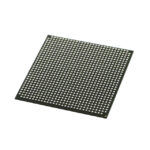 5ASXBB5D4F31C4G

The activity of extra discounts on wholesale prices is in full swing…
Please fill in your contact information and we will send you the latest wholesale price list.




