 ChipApex | Global Electronic Components Supplier

SEARCH
Search Product
Search Post
— IC芯片 | 连接器 | 传感器 | 被动器件 —
Search productSearch post
— IC芯片 | 连接器 | 传感器 | 被动器件 —
Consult the customer manager about the wholesale price.
consultation hotline:86-132-6715-2157
email:[email protected]
Contact the product manager for consultation. One-stop consultation is available.
Do you want a lower wholesale price? Please send us your inquiry and we will reply immediately.
The Altera 5ASXBB5D4F40C4N is a System on Chip (SoC) device belonging to the Arria V SX series. It integrates a dual-core ARM Cortex-A9 MPCore processor with CoreSight technology and an FPGA fabric containing 350K logic elements. The processor operates at a maximum frequency of 800MHz. The device features 64KB of RAM and supports various peripherals including DMA, POR, and WDT. Connectivity options include EBI/EMI, Ethernet, I2C, MMC/SD/SDIO, SPI, UART/USART, and USB OTG. It utilizes a 1517-FBGA package with dimensions of 40x40mm. The component supports 208 MCU I/Os and 540 FPGA I/Os, operating within a junction temperature range of 0°C to 85°C.
Verify component authenticity through authorized distributors or Intel's official channels. Confirm the specific suffix indicates the correct temperature grade and package variant. Check for End-of-Life (EOL) status or discontinuance notifications from the manufacturer. Ensure supply chain stability due to potential legacy status. Validate RoHS compliance documentation prior to integration into regulated products.
Compare against other Arria V SX variants based on required logic element count and I/O availability. Evaluate if the 800MHz processor speed meets real-time processing requirements. Assess package pin count compatibility with existing PCB layouts. Consider thermal management solutions for the 1517-FBGA form factor. Verify software support availability in Quartus Prime for the specific device architecture.
This component is part of the Arria V SoC family, designed to merge ARM processor performance with FPGA programmability. It targets applications needing high-performance computing alongside hardware acceleration. The device represents a transition point in Intel's FPGA portfolio, offering cost-effective solutions for mid-range complexity designs.
Consult Intel's official cross-reference tools for direct replacements. Consider Arria 10 series devices for enhanced performance and newer architecture. Evaluate Stratix V devices for higher density requirements. Verify software compatibility when migrating to newer FPGA families.
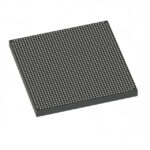 5ASXBB5D4F40C4N

The activity of extra discounts on wholesale prices is in full swing…
Please fill in your contact information and we will send you the latest wholesale price list.




