 ChipApex | Global Electronic Components Supplier
SEARCH
Search Product
Search Post
— IC芯片 | 连接器 | 传感器 | 被动器件 —
Search productSearch post
— IC芯片 | 连接器 | 传感器 | 被动器件 —
Consult the customer manager about the wholesale price.
consultation hotline:86-132-6715-2157
email:[email protected]
Contact the product manager for consultation. One-stop consultation is available.
Do you want a lower wholesale price? Please send us your inquiry and we will reply immediately.
The onsemi 6N137TSVM is a high-speed logic output optocoupler featuring an open collector output and Schottky-clamped input. It provides a data rate of 10 MB/s with typical propagation delays of 75 ns for both low-to-high and high-to-low transitions. The device offers a common-mode transient immunity of 10 kV/µs and supports an isolation voltage of 5000 Vrms. It operates within a supply voltage range of 4.5 V to 5.5 V, accepts a maximum forward current of 50 mA, and delivers an output current of 50 mA per channel. The component is housed in an 8-SMD package.
Verify the specific suffix 'S' indicates surface mount packaging distinct from through-hole variants. Confirm RoHS compliance status and lead-free finish specifications against the latest manufacturer documentation. Ensure the operating temperature range meets application requirements. Cross-reference the datasheet revision date to validate parameter accuracy before integration into design specifications.
Select this component when high-speed isolation exceeding standard optocoupler limits is required. The open collector output necessitates an external pull-up resistor for proper logic level generation. Consider the 5000 Vrms isolation rating for safety-critical applications. Verify that the 10 kV/µs CMTI rating aligns with the noise environment of the target system to prevent false triggering.
This part belongs to the 6N137 series of high-speed optocouplers manufactured by onsemi. It serves as a surface-mount variant of the widely used 6N137 family, offering equivalent electrical performance in a compact SMD form factor. The series is designed for applications requiring rapid signal transmission across isolation barriers while maintaining signal integrity.
Direct pin-compatible replacements include the 6N137TVM (through-hole DIP) for board layout adjustments. Other high-speed logic output optocouplers may require schematic modifications due to differing pinouts or output configurations. Always verify electrical parameters match before substituting.
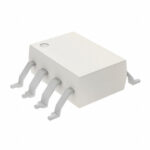 6N137TSVM
The activity of extra discounts on wholesale prices is in full swing…
Please fill in your contact information and we will send you the latest wholesale price list.






