 ChipApex | Global Electronic Components Supplier
SEARCH
Search Product
Search Post
— IC芯片 | 连接器 | 传感器 | 被动器件 —
Search productSearch post
— IC芯片 | 连接器 | 传感器 | 被动器件 —
Consult the customer manager about the wholesale price.
consultation hotline:86-132-6715-2157
email:[email protected]
Contact the product manager for consultation. One-stop consultation is available.
Do you want a lower wholesale price? Please send us your inquiry and we will reply immediately.
The SN74AVC4T774QDYYRQ1 is an automotive-grade, 4-bit dual-supply non-inverting bus transceiver with configurable voltage-level shifting and 3-state outputs. It supports independent direction control inputs for asynchronous communication between two data buses. The device features a fully configurable dual-rail design allowing each port to operate over the full 1.08V to 3.6V power-supply range. I/Os are 4.6V tolerant, and it supports partial power-down mode operation via Ioff circuitry. Maximum data rates reach 500Mbps during translation from 1.08V to 3.6V.
Verify the specific package variant DYY (SOT-23-Thin-16) matches the target PCB footprint and thermal requirements. Confirm the Q1 suffix indicates automotive qualification and compliance with AEC-Q100 standards. Ensure the ordering suffix aligns with the required reel or cut tape packaging format. Cross-reference the manufacturer part number against the latest datasheet revision to confirm pinout and electrical characteristics remain unchanged.
Select this component when designing systems requiring asynchronous communication between buses operating at different voltage levels within the 1.08V to 3.6V range. The independent direction control inputs allow precise management of signal flow for each channel. Consider the 4.6V tolerance on I/Os for interfacing with higher voltage nodes without additional protection. Evaluate the 3-state output capability for bus sharing applications where multiple devices connect to the same line.
This device belongs to the SN74AVC4T774-Q1 family of automotive bus transceivers. It is part of Texas Instruments' portfolio of level-shifting solutions designed for robust performance in demanding environments. The DYY package designation specifically identifies the SOT-23-Thin form factor, which offers a compact solution for space-constrained automotive electronics compared to larger TSSOP or WQFN options.
Direct substitutes within the same family include SN74AVC4T774PW (TSSOP) and SN74AVC4T774BQB (WQFN). Verify that alternative packages maintain identical electrical specifications and pin configurations. Non-TI equivalents may require validation of switching characteristics and voltage tolerance limits to ensure compatibility with existing system designs.
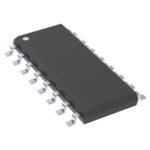 74AVC4T774QDYYRQ1
The activity of extra discounts on wholesale prices is in full swing…
Please fill in your contact information and we will send you the latest wholesale price list.





