 ChipApex | Global Electronic Components Supplier
SEARCH
Search Product
Search Post
— IC芯片 | 连接器 | 传感器 | 被动器件 —
Search productSearch post
— IC芯片 | 连接器 | 传感器 | 被动器件 —
Consult the customer manager about the wholesale price.
consultation hotline:86-132-6715-2157
email:[email protected]
Contact the product manager for consultation. One-stop consultation is available.
Do you want a lower wholesale price? Please send us your inquiry and we will reply immediately.
The 74HC173PW,112 is a quad D-type flip-flop with master reset and tri-state outputs manufactured by Nexperia. It operates within the 74HC series logic family, utilizing CMOS technology for low power consumption and high noise immunity. The device is housed in a 16-TSSOP surface-mount package (SOT-403), measuring 4.40mm in width. It supports a clock frequency of up to 95 MHz and features positive edge triggering. The component includes three-state outputs to facilitate bus-oriented systems, allowing multiple devices to share data lines without interference.
Verify component status carefully as this part is classified as obsolete and no longer manufactured by Nexperia. Sourcing may be limited to existing stock or third-party distributors rather than direct factory orders. Ensure that any available units match the original specifications and packaging requirements. Consider lead times associated with surplus inventory when planning production schedules. Confirm compatibility with alternative components if continuous supply is required for long-term projects.
Select this component only for legacy system maintenance or specific design constraints requiring its exact pinout and electrical characteristics. Due to its obsolete status, engineers should evaluate modern equivalents from the same manufacturer or compatible families to ensure future availability. Review datasheet parameters such as propagation delay and operating voltage range to confirm suitability for the target application environment before finalizing the bill of materials.
This device belongs to the 74HC series of high-speed CMOS logic integrated circuits produced by Nexperia. The 74HC family is known for wide operating voltage ranges and compatibility with standard TTL levels. As a quad D-type flip-flop, it serves fundamental roles in sequential logic design. The PW suffix indicates the TSSOP package type, while the 112 code denotes the specific tube packaging configuration used by the manufacturer for distribution.
The device utilizes positive edge triggering, meaning the data inputs are sampled and transferred to the outputs on the rising edge of the clock signal.
Yes, the outputs are tri-state, allowing them to be disconnected from the bus when not actively driving data, which is essential for multi-device bus architectures.
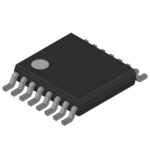 74HC173PW,112
The activity of extra discounts on wholesale prices is in full swing…
Please fill in your contact information and we will send you the latest wholesale price list.






