 ChipApex | Global Electronic Components Supplier
SEARCH
Search Product
Search Post
— IC芯片 | 连接器 | 传感器 | 被动器件 —
Search productSearch post
— IC芯片 | 连接器 | 传感器 | 被动器件 —
Consult the customer manager about the wholesale price.
consultation hotline:86-132-6715-2157
email:[email protected]
Contact the product manager for consultation. One-stop consultation is available.
Do you want a lower wholesale price? Please send us your inquiry and we will reply immediately.
The Fairchild Semiconductor 74LCXH16374MTD is a low voltage 16-bit D-type flip-flop featuring bus-hold functionality. Designed for bus-oriented applications, it contains sixteen non-inverting D-type flip-flops with 3-STATE outputs. The device operates within a supply voltage range of 1.1V to 3.6V and incorporates patented noise and EMI reduction circuitry. It supports live insertion and withdrawal, ensuring high reliability in dynamic system environments while maintaining compatibility with standard logic interfaces.
Verify the specific manufacturer source, as Fairchild Semiconductor assets were acquired by ON Semiconductor. Ensure the component designation matches current production status or obsolescence notices from authorized distributors. Confirm package integrity and authenticity through official supply chain channels to avoid counterfeit components. Cross-reference datasheet revisions for any functional updates.
Select this component for applications requiring 16-bit parallel data storage with tri-state output control in low voltage environments. The bus-hold feature simplifies PCB layout by eliminating external pull-up or pull-down resistors. Consider the 1.1V to 3.6V operating range when designing power supplies. Evaluate EMI requirements, as the internal reduction circuitry offers advantages in noisy electromagnetic environments compared to standard logic families.
This part belongs to the 74LCXH series, which represents low voltage CMOS logic devices optimized for high-speed performance and low power consumption. The series is designed to replace higher voltage logic families in modern portable and battery-operated electronics. The 16-bit configuration allows for efficient handling of wide data buses, reducing component count and board space in complex digital systems.
Check for direct equivalents from ON Semiconductor, which now manufactures Fairchild products. Verify pinout and electrical specifications against alternative 16-bit D-type flip-flops with bus-hold features. Ensure voltage tolerance and output drive capabilities match the original design requirements before substitution.
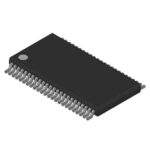 74LCXH16374MTD
The activity of extra discounts on wholesale prices is in full swing…
Please fill in your contact information and we will send you the latest wholesale price list.





