 ChipApex | Global Electronic Components Supplier
SEARCH
Search Product
Search Post
— IC芯片 | 连接器 | 传感器 | 被动器件 —
Search productSearch post
— IC芯片 | 连接器 | 传感器 | 被动器件 —
Consult the customer manager about the wholesale price.
consultation hotline:86-132-6715-2157
email:[email protected]
Contact the product manager for consultation. One-stop consultation is available.
Do you want a lower wholesale price? Please send us your inquiry and we will reply immediately.
The Nexperia 74LVC574ABQ-Q100X is an automotive-grade octal D-type flip-flop with 3-state outputs, designed for high-speed digital applications. It operates within a supply voltage range of 1.2 V to 3.6 V and supports clock frequencies up to 200 MHz. The device features low static current consumption of 10 µA and offers robust ESD protection exceeding 2 AEC-Q100 standards. Packaged in a compact 20-DHVQFN (4.5x2.5 mm) surface-mount format, it ensures reliable performance across industrial temperature ranges from -40°C to +125°C.
Verify the specific suffix Q100X confirms AEC-Q100 automotive qualification status before procurement. Ensure the ordering part number matches the exact DHVQFN package variant required for your PCB footprint. Confirm RoHS compliance and REACH status align with regional regulatory requirements. Cross-reference manufacturer datasheets for any recent packaging or labeling changes documented in PCN notices.
Select this component when automotive reliability and high-speed performance are critical. The 200 MHz capability suits applications demanding rapid data transfer rates. The wide voltage range allows compatibility with various logic families. Consider the DHVQFN package size against available board space constraints. Verify thermal dissipation requirements given the small form factor and potential heat generation during continuous high-frequency operation.
This part belongs to the Nexperia 74LVC series, known for low-power CMOS technology compatible with 3.3 V and 5 V systems. The LVC family offers improved speed and lower power consumption compared to older HC/HCT counterparts. The ABQ suffix indicates specific automotive-grade manufacturing processes and testing protocols. This series is widely used in consumer electronics and industrial automation for general-purpose logic functions.
The device supports clock frequencies up to 200 MHz under specified load conditions.
Yes, the Q100X suffix indicates compliance with the AEC-Q100 stress test qualification for automotive grade integrated circuits.
The inputs are 5 V tolerant, allowing direct interfacing with 5 V logic systems while operating at lower supply voltages.
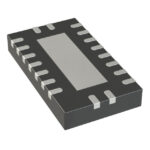 74LVC574ABQ-Q100X
The activity of extra discounts on wholesale prices is in full swing…
Please fill in your contact information and we will send you the latest wholesale price list.






