 ChipApex | Global Electronic Components Supplier
SEARCH
Search Product
Search Post
— IC芯片 | 连接器 | 传感器 | 被动器件 —
Search productSearch post
— IC芯片 | 连接器 | 传感器 | 被动器件 —
Consult the customer manager about the wholesale price.
consultation hotline:86-132-6715-2157
email:[email protected]
Contact the product manager for consultation. One-stop consultation is available.
Do you want a lower wholesale price? Please send us your inquiry and we will reply immediately.
The STMicroelectronics 74V1G79STR is a single D-type flip-flop with reset, manufactured using advanced CMOS technology. It operates within a supply voltage range of 1.65 V to 3.6 V and features high-speed data transfer capabilities. The device includes an asynchronous reset input that forces the Q output to a low state independently of the clock signal. Designed for portable applications, it offers low power consumption and supports 5 V tolerant inputs and outputs, ensuring compatibility with mixed-voltage systems.
Verify the specific ordering suffix 'STR' corresponds to the required tape-and-reel packaging configuration as defined in the official datasheet. Confirm that the device meets the necessary automotive or industrial qualification standards if applicable to your design requirements. Ensure compatibility with the intended voltage levels and interface protocols before finalizing procurement.
Select this component when a compact, single D-flip-flop with reset is needed for low-voltage digital logic applications. Consider its 5 V tolerance feature if interfacing between 1.8 V/2.5 V/3.3 V domains and 5 V systems. Evaluate the package size and pinout against board space constraints and ensure the asynchronous reset timing aligns with system synchronization requirements.
This part belongs to the 74V series of logic ICs from STMicroelectronics, designed for low-voltage applications. It complements other devices in the family such as buffers, inverters, and gates, providing essential sequential logic functions. The series is characterized by high speed, low power, and robust ESD protection, making it suitable for modern portable and battery-powered electronic designs.
Check for direct pin-to-pin replacements within the same 74V series or compatible families from other manufacturers. Verify that any substitute maintains the same voltage range, speed characteristics, and package dimensions. Ensure the replacement device also supports the required 5 V tolerance and reset functionality without altering the circuit's timing behavior.
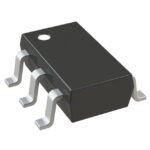 74V1G79STR
The activity of extra discounts on wholesale prices is in full swing…
Please fill in your contact information and we will send you the latest wholesale price list.







