 ChipApex | Global Electronic Components Supplier
SEARCH
Search Product
Search Post
— IC芯片 | 连接器 | 传感器 | 被动器件 —
Search productSearch post
— IC芯片 | 连接器 | 传感器 | 被动器件 —
Consult the customer manager about the wholesale price.
consultation hotline:86-132-6715-2157
email:[email protected]
Contact the product manager for consultation. One-stop consultation is available.
Do you want a lower wholesale price? Please send us your inquiry and we will reply immediately.
The Toshiba 74VHCT574AFT is an octal D-type flip-flop featuring 3-state outputs, manufactured using VHCT CMOS technology. It operates within a supply voltage range of 4.5 V to 5.5 V and supports a maximum clock frequency of 140 MHz. The device exhibits a propagation delay of 5.6 ns with output drive capabilities of 8 mA for both high and low states. Packaged in a TSSOP-20 format, it functions reliably across an industrial temperature range from -40 °C to +125 °C and holds AEC-Q100 qualification.
Verify the specific suffix 'AFT' corresponds to the TSSOP-20 package and reel packaging configuration. Confirm AEC-Q100 automotive qualification status is required for the target application. Ensure the operating voltage aligns with the 4.5 V to 5.5 V specification. Check for RoHS compliance documentation if environmental regulations apply. Validate that the 125 °C maximum junction temperature meets thermal design requirements.
Select this component when TTL-level compatibility is necessary alongside high-speed performance. The VHCT series bridges the gap between standard CMOS and LSTTL logic families. Consider the 140 MHz clock limit and 5.6 ns delay for timing-critical designs. The wide temperature range suits applications exceeding standard commercial limits. Compare against HC or HCT series if lower speed or different voltage ranges are acceptable.
This part belongs to Toshiba's VHCT logic family, designed for high-speed digital applications requiring robust noise immunity. It complements other VHCT components like buffers and gates within system architectures. The 74VHCT574AFT specifically addresses needs for parallel data storage with bus-oriented output control. It serves as a key element in complex digital signal processing chains.
Direct substitutes include the TC74VHCT574AFTEL variant, which shares identical electrical characteristics but may differ in packaging tape specifications. Verify pinout compatibility before substitution. Cross-reference with other manufacturers' VHCT equivalents only if electrical parameters match exactly.
The device utilizes VHCT technology, providing input thresholds compatible with TTL logic levels while operating on CMOS supply voltages.
Yes, the component is qualified according to the AEC-Q100 standard, making it suitable for automotive electronic environments.
The outputs enter a high-impedance state when the output enable signal is inactive, allowing multiple devices to share a common bus line.
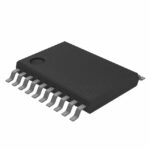 74VHCT574AFT
The activity of extra discounts on wholesale prices is in full swing…
Please fill in your contact information and we will send you the latest wholesale price list.







