 ChipApex | Global Electronic Components Supplier
SEARCH
Search Product
Search Post
— IC芯片 | 连接器 | 传感器 | 被动器件 —
Search productSearch post
— IC芯片 | 连接器 | 传感器 | 被动器件 —
Consult the customer manager about the wholesale price.
consultation hotline:86-132-6715-2157
email:[email protected]
Contact the product manager for consultation. One-stop consultation is available.
Do you want a lower wholesale price? Please send us your inquiry and we will reply immediately.
The Teridian 78Q8430 is a single-chip 10/100 Fast Ethernet controller integrating an IEEE-802.3 compliant MAC and PHY, optimized for host processor offloading in multimedia applications. It features a non-PCI pseudo-SRAM Host Bus Interface supporting 8-bit, 16-bit, and 32-bit data bus widths with big/little endian support. The device includes adaptive 32 kB SRAM FIFO memory allocation between transmit and receive paths, queue-independent user-settable watermarks, and per-queue status indication. It supports Auto MDI-X, Auto Negotiation, full/half duplex operation, and IEEE 802.3x flow control. Available in a 100-pin LQFP package, it operates within an industrial temperature range of -40 °C to +85 °C.
Verify the specific ordering suffix against the manufacturer's official documentation to confirm package type, temperature range, and lead-free compliance status. Ensure the component matches the required interface timing specifications for your host system. Cross-reference the datasheet revision date to confirm the accuracy of electrical characteristics and pin descriptions before finalizing procurement orders.
Select this component when low host CPU utilization and high throughput are critical for mixed-media applications. Verify that the host processor can interface with the pseudo-SRAM bus architecture and supports the required bus widths. Confirm that the application environment falls within the specified industrial temperature range and that the available power management features align with system energy requirements.
The 78Q8430 was originally manufactured by Teridian Semiconductor Corporation and later acquired by Maxim Integrated, which is now part of Analog Devices Inc. This component serves as a specialized Ethernet controller designed to reduce processing overhead on host CPUs in demanding multimedia environments. It represents a dedicated solution for integrating 10/100 Mbps connectivity into devices requiring efficient packet handling and media streaming capabilities.
Consult the official Analog Devices or Maxim Integrated replacement matrix for verified substitute part numbers. Ensure any alternative component maintains compatibility with the pseudo-SRAM host interface and meets the same IEEE 802.3 standards compliance requirements.
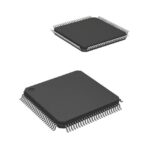 78Q8430-100IGT/F
The activity of extra discounts on wholesale prices is in full swing…
Please fill in your contact information and we will send you the latest wholesale price list.






