 ChipApex | Global Electronic Components Supplier
SEARCH
Search Product
Search Post
— IC芯片 | 连接器 | 传感器 | 被动器件 —
Search productSearch post
— IC芯片 | 连接器 | 传感器 | 被动器件 —
Consult the customer manager about the wholesale price.
consultation hotline:86-132-6715-2157
email:[email protected]
Contact the product manager for consultation. One-stop consultation is available.
Do you want a lower wholesale price? Please send us your inquiry and we will reply immediately.
The 82V2051EPPG8 is a single-channel E1 short-haul Line Interface Unit (LIU) manufactured by Renesas Electronics. It operates within a supply voltage range of 3.13V to 3.47V and supports an operating temperature range of -40°C to 85°C. The device is housed in a 44-LQFP package with dimensions of 10x10 mm and a pitch of 0.8 mm, utilizing surface mount installation. This component integrates adaptive equalization, clock data recovery, line decoding/encoding, and jitter attenuation capabilities specifically optimized for E1 line rates.
This component is officially designated as End-of-Life (EOL) by the manufacturer, with discontinuance notifications recorded in early 2024. Availability is restricted, and distributors may not stock this part number. Verification of current lifecycle status and alternative sourcing channels is required before procurement planning. Compliance with RoHS3 standards is confirmed for surviving inventory.
Engineers should evaluate the 82V2051EPPG8 primarily for legacy system maintenance or specific short-haul E1 interface requirements where its integrated LIU functions are necessary. Due to the EOL status, long-term production viability is compromised. Selection should consider the availability of qualified replacement components from the same product family or newer generations that offer pin-compatible or functionally equivalent interfaces for modern telecom designs.
The 82V2051EPPG8 belongs to the 82V2051 series of telecom interface ICs, specifically designed as a Line Interface Unit. It is related to other variants such as the 82V2051EPP and the octal version 82V2058. These devices share common architectural features for E1 signaling but differ in channel count and packaging options. The series targets high-performance short-haul transmission applications in telecommunications networks.
Public documentation identifies the 82V2058 series as an alternate option for multi-channel requirements, though it is also obsolete. Specific direct pin-for-pin replacements are not explicitly listed in the provided source material; engineers must consult official substitution guides for compatible LIU transceivers.
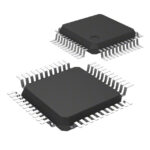 82V2051EPPG8
The activity of extra discounts on wholesale prices is in full swing…
Please fill in your contact information and we will send you the latest wholesale price list.






