 ChipApex | Global Electronic Components Supplier

SEARCH
Search Product
Search Post
— IC芯片 | 连接器 | 传感器 | 被动器件 —
Search productSearch post
— IC芯片 | 连接器 | 传感器 | 被动器件 —
Consult the customer manager about the wholesale price.
consultation hotline:86-132-6715-2157
email:[email protected]
Contact the product manager for consultation. One-stop consultation is available.
Do you want a lower wholesale price? Please send us your inquiry and we will reply immediately.
The ICS83904AGI-02LFT is a low skew, high-performance 1-to-4 Crystal Oscillator/Crystal-to-LVCMOS Fanout Buffer from the HiPerClockS family. It features two crystal oscillator input pairs and one LVCMOS/LVTTL clock input, supporting output frequencies up to 200MHz with a maximum output skew of 40ps at VDD = VDDO = 3.3V. The device operates within an ambient temperature range of -40°C to 85°C and supports multiple supply voltage modes including 3.3V/3.3V, 3.3V/2.5V, 3.3V/1.8V, 2.5V/2.5V, and 2.5V/1.8V. It is available in a 16-lead TSSOP package.
Verify that the component matches the specified 16-lead TSSOP package and RoHS 6 lead-free status. Confirm the operating temperature range requirements align with the -40°C to 85°C specification. Ensure supply voltage configurations match the supported modes (e.g., 3.3V/3.3V). Check for any specific ordering suffix requirements if different variants are needed.
Select this component when low skew and low phase noise are critical for clock distribution. Consider the supported supply voltage combinations (Core/Output) such as 3.3V/3.3V or 2.5V/2.5V. Evaluate the need for dual crystal inputs versus single-ended LVCMOS input based on system design. Ensure the output drive capability meets the load requirements given the 19Ω typical output impedance.
The ICS83904AGI-02LFT belongs to the HiPerClockS family of high-performance clock solutions originally developed by IDT (Integrated Device Technology), which was later acquired by Renesas Electronics Corporation. This series is designed for applications requiring precise timing and low jitter characteristics.
Public confirmed substitute part numbers are not provided in the source material. Verify compatibility with existing designs if considering alternative fanout buffers from other manufacturers.
The maximum output skew is 40ps when VDD = VDDO = 3.3V.
Yes, it has one LVCMOS/LVTTL clock input in addition to two crystal oscillator input pairs.
The typical RMS phase jitter is 0.16ps in the frequency range of 100Hz to 1MHz.
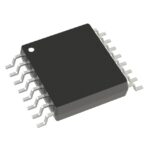 83904AGI-02LFT

The activity of extra discounts on wholesale prices is in full swing…
Please fill in your contact information and we will send you the latest wholesale price list.






