 ChipApex | Global Electronic Components Supplier

SEARCH
Search Product
Search Post
— IC芯片 | 连接器 | 传感器 | 被动器件 —
Search productSearch post
— IC芯片 | 连接器 | 传感器 | 被动器件 —
Consult the customer manager about the wholesale price.
consultation hotline:86-132-6715-2157
email:[email protected]
Contact the product manager for consultation. One-stop consultation is available.
Do you want a lower wholesale price? Please send us your inquiry and we will reply immediately.
The 85311AMLF-IKR is a dual differential-to-differential fanout buffer manufactured by Renesas Electronics Corporation. It translates standard differential input signals, including LVDS, LVPECL, LVHSTL, SSTL, and HCSL, into two banks of differential 2.5V or 3.3V ECL/LVPECL outputs. The device supports maximum output frequencies up to 700MHz with typical part-to-part skew of 270ps and propagation delay of 1.7ns. It operates within an ambient temperature range of -40°C to +85°C and utilizes a lead-free Small Outline Integrated Circuit (SOIC) package.
Verify the obsolete status of this component through official Renesas channels before procurement planning. Confirm availability of alternative packages or next-generation replacements if current stock is limited. Ensure that the specific suffix 'IKR' matches the required temperature grade and packaging configuration for your design constraints.
Select this component when designing systems that require driving multiple loads from a single differential source while maintaining signal integrity across different voltage domains. Consider the 270ps part-to-part skew specification for timing budget calculations in parallel data paths. Verify that the power supply requirements align with the 2.5V or 3.3V operating ranges specified for LVPECL or ECL modes respectively.
This model belongs to the family of high-performance clock buffers designed for complex digital systems. It serves as a bridge between lower-voltage differential standards like LVDS and higher-speed ECL/LVPECL interfaces. The device is engineered to minimize jitter and skew, making it suitable for applications where timing precision is critical for system synchronization and data throughput.
Consult Renesas documentation for migration guides from legacy clock buffer families. Identify equivalent devices within the current portfolio that offer similar pinouts and electrical specifications. Verify that any substitute maintains the required input/output voltage compatibility and skew performance metrics.
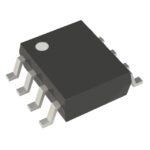 85311AMLF-IKR

The activity of extra discounts on wholesale prices is in full swing…
Please fill in your contact information and we will send you the latest wholesale price list.






