 ChipApex | Global Electronic Components Supplier

SEARCH
Search Product
Search Post
— IC芯片 | 连接器 | 传感器 | 被动器件 —
Search productSearch post
— IC芯片 | 连接器 | 传感器 | 被动器件 —
Consult the customer manager about the wholesale price.
consultation hotline:86-132-6715-2157
email:[email protected]
Contact the product manager for consultation. One-stop consultation is available.
Do you want a lower wholesale price? Please send us your inquiry and we will reply immediately.
The 854S202AYILF is a high-performance clock multiplexer manufactured by Renesas Electronics Corporation. It functions as a 12:2 differential-to-LVDS multiplexer, supporting maximum output frequencies up to 3 GHz. The device accepts twelve selectable differential clock or data inputs, including CLKx and nCLKx pairs compatible with LVPECL or LVDS signal levels. It provides two fully differential LVDS outputs. Key electrical parameters include a typical additive phase jitter of 0.16 ps RMS at 155.52 MHz. The component operates within a supply voltage range of 3.135 V to 3.465 V and supports an ambient operating temperature from -40°C to +85°C. It is housed in a 48-lead TQFP package with exposed pad.
Verify component authenticity through authorized distributors due to obsolete status. Confirm package marking and lot codes against official Renesas documentation. Check for moisture sensitivity level compliance prior to soldering. Ensure replacement components meet identical electrical specifications if sourcing alternatives. Validate supply chain integrity to avoid counterfeit parts.
Select this component when designing systems requiring 12-input multiplexing to dual LVDS outputs. Consider the 3 GHz frequency limit and 0.16 ps jitter performance for timing-critical applications. Evaluate thermal management requirements for the TQFP package. Compare input voltage compatibility with existing LVPECL or LVDS sources. Assess board space constraints relative to the 48-lead footprint.
This part belongs to the 854S series of clock multiplexers designed for high-speed digital applications. It complements other Renesas timing solutions by providing robust differential signal handling. The device integrates seamlessly into complex clock trees where signal source redundancy and low noise are paramount. It represents a specialized solution for managing multiple clock domains within a single integrated circuit.
The 854S202AYILF is marked as obsolete. No direct public substitute part numbers are confirmed in available documentation. Designers should evaluate pin-compatible alternatives or redesign circuits using current Renesas multiplexer families. Verify functional equivalence before implementing any cross-reference components.
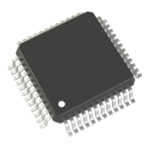 854S202AYILF

The activity of extra discounts on wholesale prices is in full swing…
Please fill in your contact information and we will send you the latest wholesale price list.






