 ChipApex | Global Electronic Components Supplier
SEARCH
Search Product
Search Post
— IC芯片 | 连接器 | 传感器 | 被动器件 —
Search productSearch post
— IC芯片 | 连接器 | 传感器 | 被动器件 —
Consult the customer manager about the wholesale price.
consultation hotline:86-132-6715-2157
email:[email protected]
Contact the product manager for consultation. One-stop consultation is available.
Do you want a lower wholesale price? Please send us your inquiry and we will reply immediately.
The Marvell Alaska 88E1512-A0-NNP2C000 is a single-port Gigabit Ethernet transceiver compliant with IEEE 802.3 standards for 10BASE-T, 100BASE-TX, and 1000BASE-T. It supports RGMII and SGMII MAC interfaces, enabling connections to copper media or fiber via SFP modules. The device integrates MDI termination resistors and an internal switching voltage regulator, allowing operation from a single 3.3V supply while supporting 1.8V, 2.5V, and 3.3V LVCMOS I/O standards. Operating within a commercial temperature range of 0°C to +70°C, it utilizes advanced mixed-signal processing for equalization and error correction.
Verify the specific ordering suffix against the manufacturer's current datasheet to confirm package type and temperature grade. Ensure the design accounts for the 56-pin QFN footprint and thermal requirements. Confirm compatibility with the host MAC interface timing modes before finalizing procurement.
Select this component when a single-port Gigabit PHY with flexible MAC interface options is required. It is suitable for designs needing auto-media detection between copper and fiber links. Verify that the system power budget accommodates the internal regulator if utilizing the single 3.3V supply configuration.
This part belongs to the Marvell Alaska 88E151x family, which includes the 88E1510, 88E1512, 88E1514, and 88E1518. The 88E1512 is distinguished by its support for SGMII-to-Copper and RGMII-to-Fiber/SGMII modes, packaged in a 56-pin QFN. It shares core physical layer capabilities with the series but offers specific interface flexibility for mixed-media applications.
The 88E1512-A0-NNP2I000 serves as the industrial-grade equivalent with extended temperature support (-40°C to +85°C). Other family members like the 88E1510 or 88E1514 may be considered if their specific interface limitations align with the design requirements.
Yes, the device supports RGMII to Fiber/SGMII mode, allowing connection to SFP modules supporting 1000BASE-X and 100BASE-FX standards.
The integrated MDI termination resistors eliminate the need for external passive components, simplifying the PCB layout and reducing overall board cost while meeting IEEE 802.3 return loss specifications.
It incorporates the Advanced Virtual Cable Tester (VCT), which uses Time Domain Reflectometry (TDR) to detect and report cabling issues such as pair swaps, polarity errors, and impedance mismatches within one meter of the fault.
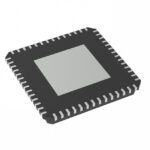 88E1512-A0-NNP2C000
The activity of extra discounts on wholesale prices is in full swing…
Please fill in your contact information and we will send you the latest wholesale price list.





