 ChipApex | Global Electronic Components Supplier

SEARCH
Search Product
Search Post
— IC芯片 | 连接器 | 传感器 | 被动器件 —
Search productSearch post
— IC芯片 | 连接器 | 传感器 | 被动器件 —
Consult the customer manager about the wholesale price.
consultation hotline:86-132-6715-2157
email:[email protected]
Contact the product manager for consultation. One-stop consultation is available.
Do you want a lower wholesale price? Please send us your inquiry and we will reply immediately.
The A3PE600-PQ208 is a ProASIC3E Flash FPGA featuring 600,000 system gates and 13,824 VersaTiles. It utilizes a 130-nm flash-based CMOS process for nonvolatile configuration. The device supports a maximum system performance of 350 MHz and includes 108 kbits of True Dual-Port SRAM organized into 24 blocks. It offers up to 270 user I/Os within a PQFP-208 package (28 x 28 mm). Key features include Instant On Level 0 support, bank-selectable I/O voltages (1.5 V, 1.8 V, 2.5 V, 3.3 V), six Clock Conditioning Circuits with integrated PLLs, and on-chip AES decryption for secure in-system programming.
Verify the specific ordering suffix against the manufacturer's current datasheet to confirm temperature grade and packaging compliance. Ensure the component matches the required speed grade and that any necessary software licenses for ARM cores or encryption are accounted for during procurement planning.
Select this device for designs requiring nonvolatile configuration and high-density logic within a QFP package. Consider the PQ208 pin count limits when mapping I/O standards. Verify that the 108 kbits of embedded SRAM meets memory requirements before choosing higher-density alternatives like the A3PE1500.
This component belongs to the Microsemi ProASIC3E family, which bridges the gap between ASIC costs and FPGA flexibility. It serves as a drop-in replacement for complex CPLDs and offers lower power consumption than SRAM-based FPGAs while retaining design data without battery backup.
Pin-compatible options within the ProASIC3E family include the A3PE1500 and A3PE3000. These devices offer higher gate counts but require verification of routing resource availability and I/O standard limitations specific to the PQ208 package.
No, the device uses reprogrammable flash technology, allowing it to be Instant On without external boot PROMs or microcontrollers.
The PQ208 package supports six CCC blocks, though only the center east and west PLLs are fully accessible for user I/O optimization; all six blocks remain usable for clock delay operations.
The device includes FlashLock for design protection and an on-chip 128-bit AES decryption engine compliant with IEEE 1532 for secure ISP via JTAG.
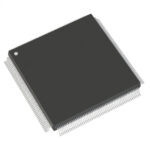 A3PE600-PQ208

The activity of extra discounts on wholesale prices is in full swing…
Please fill in your contact information and we will send you the latest wholesale price list.






