 ChipApex | Global Electronic Components Supplier

SEARCH
Search Product
Search Post
— IC芯片 | 连接器 | 传感器 | 被动器件 —
Search productSearch post
— IC芯片 | 连接器 | 传感器 | 被动器件 —
Consult the customer manager about the wholesale price.
consultation hotline:86-132-6715-2157
email:[email protected]
Contact the product manager for consultation. One-stop consultation is available.
Do you want a lower wholesale price? Please send us your inquiry and we will reply immediately.
The A3PN250-2VQ100 is a ProASIC3 nano Flash Field Programmable Gate Array (FPGA) manufactured by Microchip Technology. It features 250,000 system gates and supports up to 71 user I/Os within a 100-pin VQFP package. The device operates with a core supply voltage range of 1.425 V to 1.575 V and delivers a maximum system performance frequency of 350 MHz. It includes up to 36 kbits of True Dual-Port SRAM and utilizes a 130-nm flash-based CMOS process. The component retains programmed designs when powered off and supports mixed-voltage I/O operation at 1.5 V, 1.8 V, 2.5 V, and 3.3 V.
Verify the specific suffix codes against official Microchip documentation to confirm pin compatibility and electrical characteristics. Ensure that the ordering information matches the required temperature grade and package variant. Cross-reference the manufacturer part number with authorized distributor catalogs to validate authenticity and current production status before finalizing procurement orders.
Select this component for applications requiring high logic density in a compact surface-mount package. Evaluate the 350 MHz performance capability against system timing requirements. Consider the integrated flash technology for designs needing immediate operational readiness upon power application. Verify that the available I/O count and voltage standards align with the target peripheral interface specifications.
This device belongs to the ProASIC3 nano family, which bridges the gap between low-density ASICs and complex FPGAs. The series emphasizes low power consumption and instant-on capabilities through its proprietary flash process. It serves as a cost-effective solution for mid-range logic applications where reprogrammability and non-volatility are critical design constraints.
Consult official Microchip compatibility matrices for verified substitutes. Pin-compatible alternatives within the ProASIC3 family may offer different gate counts or speed grades. Validate any replacement against the original schematic and timing constraints to ensure functional equivalence.
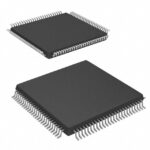 A3PN250-2VQ100

The activity of extra discounts on wholesale prices is in full swing…
Please fill in your contact information and we will send you the latest wholesale price list.





