 ChipApex | Global Electronic Components Supplier

SEARCH
Search Product
Search Post
— IC芯片 | 连接器 | 传感器 | 被动器件 —
Search productSearch post
— IC芯片 | 连接器 | 传感器 | 被动器件 —
Consult the customer manager about the wholesale price.
consultation hotline:86-132-6715-2157
email:[email protected]
Contact the product manager for consultation. One-stop consultation is available.
Do you want a lower wholesale price? Please send us your inquiry and we will reply immediately.
The A3PN250-ZVQ100 is a ProASIC3 nano Flash Field Programmable Gate Array (FPGA) manufactured by Microchip Technology. It features 250,000 system gates and includes up to 36 kbits of True Dual-Port SRAM. The device supports mixed-voltage I/O operation at 1.5 V, 1.8 V, 2.5 V, and 3.3 V with bank-selectable voltages. It utilizes a 130-nm flash-based CMOS process for instant-on functionality and non-volatile configuration retention. The component operates within a supply voltage range of 1.425 V to 1.575 V and is housed in a 100-VQFP package.
Verify the specific suffix 'Z' against official Microchip documentation to confirm if it denotes a specific environmental compliance status or manufacturing revision distinct from standard variants. Confirm RoHS compliance status directly with the manufacturer as regulatory requirements may vary by production batch. Ensure the ordering part number matches the exact pinout and voltage specifications required for the target application design.
Select this model when instant-on boot times are critical due to its non-volatile flash architecture. Choose this variant for applications requiring mixed-voltage I/O banks without external level shifters. Consider the 100-VQFP package constraints regarding thermal dissipation and board space. Verify that the 250k gate count and 36 kbit RAM resources align with the final synthesized design complexity.
This component belongs to the ProASIC3 nano family, which bridges the gap between ASICs and traditional SRAM-based FPGAs. Unlike volatile counterparts, this series retains configuration data without external memory. The 'nano' designation indicates optimized low-power consumption and smaller form factors compared to the standard ProASIC3 line, targeting cost-sensitive and power-efficient embedded markets.
Direct pin-compatible replacements within the same package include other ProASIC3 nano models such as A3PN125 or A3PN060, provided logic resource requirements are met. Cross-family migration to ProASIC3 L or E series requires schematic and layout modifications due to different electrical characteristics and pinouts.

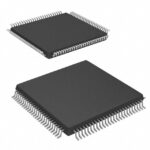 A3PN250-ZVQ100

The activity of extra discounts on wholesale prices is in full swing…
Please fill in your contact information and we will send you the latest wholesale price list.




