 ChipApex | Global Electronic Components Supplier

SEARCH
Search Product
Search Post
— IC芯片 | 连接器 | 传感器 | 被动器件 —
Search productSearch post
— IC芯片 | 连接器 | 传感器 | 被动器件 —
Consult the customer manager about the wholesale price.
consultation hotline:86-132-6715-2157
email:[email protected]
Contact the product manager for consultation. One-stop consultation is available.
Do you want a lower wholesale price? Please send us your inquiry and we will reply immediately.
The A40MX04-1VQ80I is a high-capacity Field Programmable Gate Array (FPGA) from the Microchip MX family, designed as a single-chip ASIC alternative. It features 547 Configurable Logic Blocks (CLBs) and approximately 6,000 system gates. The device supports mixed-voltage operation with core and I/O voltages of either 3.3V or 5.0V, ensuring PCI-compliant interface capabilities. It utilizes an electrically erasable, in-system programmable Flash technology that retains configuration data without external memory. The component is housed in a VQFP-80 package and operates within a commercial temperature range of 0°C to 70°C.
Verify the specific suffix '1' indicates the commercial temperature grade (0°C to 70°C) rather than industrial specifications. Confirm the VQFP-80 package dimensions match the target PCB footprint. Ensure the design tool version supports the MX family Flash programming requirements. Check for any recent Product Change Notifications regarding assembly sites or material compliance updates.
Select this model when a non-volatile FPGA solution is required to reduce bill-of-materials count by removing external configuration chips. Choose the VQ80 package if space constraints favor a thin quad flat pack over larger PLCC or QFP options. Verify that the 547 CLB capacity meets the logic density needs, as higher performance variants exist within the broader MX series.
This component belongs to the Actel/Microsemi MX family of Flash FPGAs, which were prominent before the acquisition and integration into Microchip's broader portfolio. The A40MX04 variant specifically targets mid-range complexity applications previously filled by ASICs or CPLDs. It represents the transition era of in-system programmable logic using Flash technology rather than SRAM-based volatile configurations.
Direct replacements include other MX family members like the A40MX02 or A40MX08 depending on logic density needs. Cross-family migration to PolarFire or IGloo2 requires significant architectural redesign due to differences in power management and I/O structures.
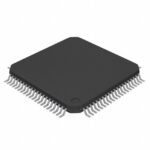 A40MX04-1VQ80I

The activity of extra discounts on wholesale prices is in full swing…
Please fill in your contact information and we will send you the latest wholesale price list.






