 ChipApex | Global Electronic Components Supplier

SEARCH
Search Product
Search Post
— IC芯片 | 连接器 | 传感器 | 被动器件 —
Search productSearch post
— IC芯片 | 连接器 | 传感器 | 被动器件 —
Consult the customer manager about the wholesale price.
consultation hotline:86-132-6715-2157
email:[email protected]
Contact the product manager for consultation. One-stop consultation is available.
Do you want a lower wholesale price? Please send us your inquiry and we will reply immediately.
The A42MX09-1TQ176I is an MX series Field Programmable Gate Array (FPGA) manufactured by Microsemi Corporation. It features a logic capacity of 14,000 system gates and includes 104 user-programmable I/O pins. The device is housed in a 176-LQFP surface-mount package with dimensions of 24x24 mm. Electrical specifications include a supply voltage range of 3V to 3.6V or 4.5V to 5.5V. The component supports a Moisture Sensitivity Level (MSL) of 3, corresponding to a 168-hour reflow limit. Operating temperatures are rated from -40°C to +85°C for commercial applications.
Verify the specific revision status before procurement, as this part number has been marked as obsolete in certain distributor records. Confirm RoHS compliance requirements against project specifications, noting that some MX family variants may not meet current environmental standards. Ensure the 176-LQFP footprint matches the PCB design constraints and that the MSL 3 handling procedures are strictly followed during assembly to prevent moisture-induced damage.
Select this component when a moderate gate count of 14,000 is sufficient for consolidating discrete logic functions into a single chip. The 176-pin TQFP package is suitable for designs requiring a balance between I/O density and board space. Consider the dual voltage support if the system requires interfacing with both 3.3V and 5V domains without additional level shifters. Verify that the -40°C to +85°C temperature range meets the operational environment requirements.
This device belongs to the Microsemi 40MX and 42MX FPGA families, which are designed to provide cost-effective solutions at 5V. These devices offer high performance while shortening system design cycles. The MX series is characterized by its ability to replace multiple complex programmable logic devices, offering a streamlined architecture for embedded logic applications.
Direct substitutes within the same package and pinout should be sought within the A42MX09 series or the broader 40MX/42MX family. Verify compatibility with existing programming tools, such as Silicon Explorer II, when considering alternative part numbers.
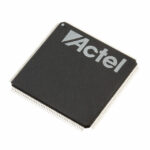 A42MX09-1TQ176I

The activity of extra discounts on wholesale prices is in full swing…
Please fill in your contact information and we will send you the latest wholesale price list.





