 ChipApex | Global Electronic Components Supplier

SEARCH
Search Product
Search Post
— IC芯片 | 连接器 | 传感器 | 被动器件 —
Search productSearch post
— IC芯片 | 连接器 | 传感器 | 被动器件 —
Consult the customer manager about the wholesale price.
consultation hotline:86-132-6715-2157
email:[email protected]
Contact the product manager for consultation. One-stop consultation is available.
Do you want a lower wholesale price? Please send us your inquiry and we will reply immediately.
The A42MX09-3TQG176 is a field-programmable gate array from the Microchip MX series, featuring approximately 14,000 system gates and 336 logic elements. It provides 104 input/output pins and operates within a supply voltage range of 4.5 V to 5.5 V, with standard operation at 3.3 V or 5 V. The device is housed in a 176-pin TQFP package and supports surface-mount installation. It functions reliably across an industrial temperature range of -40°C to +85°C. This non-volatile FPGA utilizes flash-based technology for instant-on capability without external configuration memory.
Verify the specific suffix '3' indicates the extended industrial temperature grade (-40°C to +85°C) against the official datasheet. Confirm the 176-TQFP package dimensions match your PCB footprint requirements. Check for recent Product Change Notifications regarding manufacturing site or material updates. Ensure ESD protection protocols are followed during handling due to moisture sensitivity classification.
Select this model when instant-on boot times are critical and external configuration EEPROMs cannot be used. Compare logic element counts against similar MX series parts if higher density is needed. Verify that the 104 I/O count meets interface requirements. Consider power consumption specifications relative to other FPGA families if thermal management is constrained.
This component belongs to the Actel (now Microchip) MX family of flash FPGAs, known for combining SRAM flexibility with non-volatile storage. The A42MX09 variant represents a mid-range density option within this lineage. It serves as a successor to older PAL/GAL devices while offering reprogrammability. The part integrates on-chip configuration memory, simplifying board design compared to volatile SRAM-based FPGAs.
Direct pin-to-pin replacements may include other A42MX09 variants with different packages or temperature grades. For upgraded capacity, consider A42MX24 or A42MX38 models if pin compatibility allows. Cross-family migration to PolarFire or IGLOO2 requires schematic and code adaptation despite functional similarities.
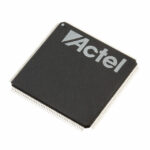 A42MX09-3TQG176

The activity of extra discounts on wholesale prices is in full swing…
Please fill in your contact information and we will send you the latest wholesale price list.






