 ChipApex | Global Electronic Components Supplier

SEARCH
Search Product
Search Post
— IC芯片 | 连接器 | 传感器 | 被动器件 —
Search productSearch post
— IC芯片 | 连接器 | 传感器 | 被动器件 —
Consult the customer manager about the wholesale price.
consultation hotline:86-132-6715-2157
email:[email protected]
Contact the product manager for consultation. One-stop consultation is available.
Do you want a lower wholesale price? Please send us your inquiry and we will reply immediately.
The A42MX36-1PQG208M is a Field Programmable Gate Array from the Microchip A42MX family, housed in a PQFP-208 package. It contains 2438 Configurable Logic Blocks (CLBs) and offers 36,000 system gates. The device supports mixed-voltage operation at 3.3 V or 5.0 V for core and I/Os, with a maximum operating voltage of 5.5 V. It features a maximum clock frequency of 48 MHz and a CLB-maximum combinational delay of 2.32 ns. The component operates within a temperature range of -55 °C to +125 °C and includes up to 2.5 kbits of configurable dual-port SRAM.
Verify the specific suffix 'M' against official Microchip documentation to confirm it denotes the military temperature grade (-55°C to +125°C). Confirm RoHS compliance status as datasheets may vary by revision. Check for End-of-Life (EOL) notices or Last Time Buy dates, as older Actel/Microsemi FPGA families often face obsolescence. Ensure supply chain sources are authorized distributors to avoid counterfeit components.
Select this model when high performance at 5V is required alongside wide industrial or military temperature ranges. Compare against the 'I' suffix variant if only industrial temperature (-40°C to +85°C) is needed. Verify that the 208-pin PQFP package fits the PCB footprint constraints. Consider the 36,000 gate capacity relative to design complexity to ensure sufficient logic resources without excessive cost.
This component belongs to the A42MX series, originally developed by Actel and acquired by Microsemi, now part of Microchip Technology. The series is designed as a high-capacity, single-chip solution for applications replacing complex discrete logic. The A42MX36 specifically targets designs needing substantial logic density with fast access times and robust radiation tolerance options available in ceramic packages.
Publicly confirmed substitute part numbers for this specific configuration are not available in the provided data. Designers should consult Microchip's official lifecycle management tools for current obsolescence status and recommended migration paths to modern FPGA families.
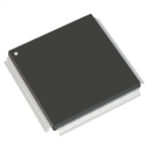 A42MX36-1PQG208M

The activity of extra discounts on wholesale prices is in full swing…
Please fill in your contact information and we will send you the latest wholesale price list.






