 ChipApex | Global Electronic Components Supplier
SEARCH
Search Product
Search Post
— IC芯片 | 连接器 | 传感器 | 被动器件 —
Search productSearch post
— IC芯片 | 连接器 | 传感器 | 被动器件 —
Consult the customer manager about the wholesale price.
consultation hotline:86-132-6715-2157
email:[email protected]
Contact the product manager for consultation. One-stop consultation is available.
Do you want a lower wholesale price? Please send us your inquiry and we will reply immediately.
The AA4003MTR-E1 is a Class AB stereo audio power amplifier manufactured by Diodes Incorporated. It delivers 2.0W per channel into 4Ω loads in BTL mode with THD+N less than 1%, or 160mW per channel into 16Ω loads in SE mode. The device operates on a supply voltage range of 2.7V to 5.5V and features external feedback loops for flexible gain setup. It includes optimized click/pop noise suppression, thermal shutdown protection, and low power consumption in shutdown mode (0.7µA typical). Available in SOIC-16 and TSSOP-20(EDP) packages.
Verify the specific package type required for the design, as the AA4003 is available in both SOIC-16 and TSSOP-20(EDP) variants. Confirm that the ordering suffix matches the desired packing method, such as Tape & Reel for surface mount assembly. Ensure compliance with RoHS standards if lead-free components are mandated for the production environment.
Select this component for portable applications requiring high efficiency and low quiescent current. Consider the BTL configuration for higher power delivery to main speakers and SE mode for headphone driving. Evaluate thermal management requirements, particularly for BTL operation at lower impedances, as heat dissipation is critical for maintaining performance within safe operating temperatures.
The AA4003 belongs to Diodes Incorporated's portfolio of analog audio amplifiers designed for consumer electronics. It is part of a series of Class AB amplifiers optimized for battery-powered devices, offering a balance between audio fidelity and power efficiency. The device integrates multiple protection features to ensure reliability in compact form factors common in modern portable media players.
Public confirmed substitute part numbers: None identified in source material.
The mode is determined by the logic level on the HP_SENSE pin. A low level sets the chip to BTL mode, while a high level sets it to SE mode.
The BYPASS pin connects to an internal reference voltage. Connecting a capacitor here filters internal noise, reduces harmonic distortion, and improves power supply rejection ratio.
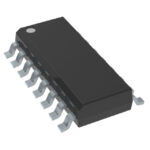 AA4003MTR-E1
The activity of extra discounts on wholesale prices is in full swing…
Please fill in your contact information and we will send you the latest wholesale price list.





