 ChipApex | Global Electronic Components Supplier
SEARCH
Search Product
Search Post
— IC芯片 | 连接器 | 传感器 | 被动器件 —
Search productSearch post
— IC芯片 | 连接器 | 传感器 | 被动器件 —
Consult the customer manager about the wholesale price.
consultation hotline:86-132-6715-2157
email:[email protected]
Contact the product manager for consultation. One-stop consultation is available.
Do you want a lower wholesale price? Please send us your inquiry and we will reply immediately.
The ADAU1513ACPZ-RL is a 2-channel bridge-tied load (BTL) Class-D audio power stage manufactured by Analog Devices Inc. It operates from a PVDD supply range of 9 V to 18 V and accepts 3.3 V logic differential PWM inputs. The device delivers up to 19 W per channel into a 4 Ω load at 1% THD+N with 90% efficiency. Key specifications include a thermal warning threshold at 135°C, thermal shutdown at 150°C, overcurrent protection at 5 A peak, and an undervoltage lockout trip threshold of 5 V.
Verify the specific package option required, as the component is available in both Lead Frame Chip Scale Package (CP-48-1) and Thin Quad Flat Package (SV-48-5). Confirm that the ordering suffix matches the desired reel quantity, such as RL for standard tape and reel or RL7 for smaller quantities. Ensure compatibility with the intended PWM modulator source before procurement.
Select this component when a high-efficiency, integrated Class-D power stage is needed for stereo audio applications. It is suitable for designs requiring direct digital PWM input without external gate drivers. Consider the thermal management requirements, as output powers above 15 W at 4 Ω may necessitate additional heat-sinking for continuous operation.
The ADAU1513 is part of Analog Devices' Class-D audio power stage portfolio. It is designed to work in conjunction with dedicated PWM processors like the ADAV4201 to form complete 4-channel audio systems using two units. The device simplifies design by integrating level shifting, dead time control, and comprehensive protection features within a single package.
Public confirmed substitute part numbers are not provided in the documentation.
The device offers two options: Option 1 uses the OTW pin to mute the amplifier when the junction temperature reaches approximately 135°C, allowing safe recovery below the 150°C shutdown limit. Option 2 ties the ERR pin to MUTE, causing the device to recycle on and off until the fault condition is removed.
Hold STDN and MUTE low during initial power-up. Pull STDN high first, then pull MUTE high to activate the power stage. If using a modulator other than the ADAV4201, ensure it has built-in pop-and-click suppression or use a microcontroller to manage the sequence.
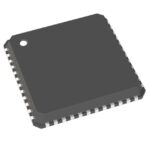 ADAU1513ACPZ-RL
The activity of extra discounts on wholesale prices is in full swing…
Please fill in your contact information and we will send you the latest wholesale price list.





