 ChipApex | Global Electronic Components Supplier
SEARCH
Search Product
Search Post
— IC芯片 | 连接器 | 传感器 | 被动器件 —
Search productSearch post
— IC芯片 | 连接器 | 传感器 | 被动器件 —
Consult the customer manager about the wholesale price.
consultation hotline:86-132-6715-2157
email:[email protected]
Contact the product manager for consultation. One-stop consultation is available.
Do you want a lower wholesale price? Please send us your inquiry and we will reply immediately.
The ACPL-M61T-500E is a single-channel high-speed optocoupler from Broadcom's ACPL series, housed in a 5-pin SO package. It features a DC input and an open collector logic output with Schottky clamping. Key electrical parameters include a typical rise time of 24ns, a typical fall time of 10ns, and a maximum forward voltage of 1.85V. The device supports a data rate of 10MBd and offers an isolation voltage of 4000Vrms. It operates within a temperature range of -40°C to 125°C and complies with AEC-Q100 automotive standards.
Verify the complete part number suffix, such as '500E', to ensure correct packaging and compliance status. Confirm that the specific variant matches the required isolation voltage and output configuration. Check for RoHS3 compliance and AEC-Q100 certification if automotive applications are intended. Ensure the supplier provides official datasheets matching the exact component designation to avoid functional mismatches.
Select this component when high-speed isolation is critical for system performance. The open collector output requires external pull-up resistors, which must be accounted for in the circuit design. Consider the 1.85V maximum forward voltage drop for drive current calculations. The 5-pin SO package limits pin count, so verify footprint compatibility during PCB layout. Evaluate the 15kV/µs CMTI rating against noise levels in the application environment.
This device belongs to the Broadcom ACPL series of optocouplers, designed for high-performance isolation applications. The ACPL-M61T variant specifically targets markets needing rapid signal transfer with reliable galvanic isolation. It complements other members of the family by offering a balance of speed and robustness in a compact surface-mount form factor suitable for dense electronic assemblies.
The ACPL-M61M-500E is a documented alternative within the same product line, featuring push-pull output instead of open collector. Verify that the change in output topology does not impact existing circuit designs requiring pull-up components. Both parts share similar isolation ratings and package types, facilitating potential cross-referencing if supply constraints arise.
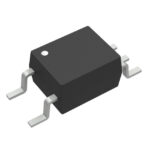 ACPL-M61T-500
The activity of extra discounts on wholesale prices is in full swing…
Please fill in your contact information and we will send you the latest wholesale price list.





