 ChipApex | Global Electronic Components Supplier
ACS1790IMLTRT
Search Product
Search Post
— IC芯片 | 连接器 | 传感器 | 被动器件 —
Search productSearch post
— IC芯片 | 连接器 | 传感器 | 被动器件 —
Consult the customer manager about the wholesale price.
consultation hotline:86-132-6715-2157
email:[email protected]
Contact the product manager for consultation. One-stop consultation is available.
Do you want a lower wholesale price? Please send us your inquiry and we will reply immediately.
The ACS1790IMLTRT is a high-performance, low phase noise programmable frequency synthesizer with an integrated voltage-controlled oscillator (VCO). Designed for Synchronous Ethernet, SONET, and SDH applications, it generates outputs locked to an external reference or operates standalone. The device features ultra-fine dynamic output frequency control via an I2C interface, supporting LVPECL and LVCMOS outputs. It meets RMS jitter requirements for Gigabit Ethernet, 10 Gigabit Ethernet, and OC-48/STM-16 standards.
Verify the specific ordering suffix against the manufacturer's current documentation to confirm packaging details such as tape and reel quantities. Ensure compatibility with the required I2C bus voltage levels and check for any recent product change notifications regarding pinout or electrical specifications before finalizing procurement.
Select this component when low phase noise and high frequency stability are critical for synchronous networking protocols. The integrated VCO simplifies design by eliminating external components typically required for PLL synthesis. Consider the available output drivers (LVPECL and LVCMOS) to match the downstream receiver requirements without additional level shifting circuitry.
The ACS1790T belongs to Semtech's Advanced Communications Product Group portfolio, specifically targeting precision timing solutions for telecommunications infrastructure. It is often used in conjunction with ToPSync devices to simplify system architecture by reducing the bill of materials and component count in complex synchronization networks.
Publicly confirmed substitute part numbers are not available in the provided source material. Evaluate alternative frequency synthesizers based on matching VCO range, jitter performance masks, and package dimensions if direct replacement is necessary.
The typical RMS jitter performance for OC-48/STM-16 (ANSI T1.105.03 & ITU-T G.813) is 0.56 ps within the 12 kHz to 20 MHz bandwidth.
Once calibrated, the output frequency can be adjusted by up to +/- 500 ppm without requiring further calibration. Adjustments outside this range necessitate initiating a new calibration cycle.
The device supports 10, 12.8, 20, or 25 MHz input clock frequencies, which can be selected via hardware pins.
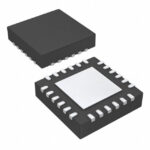 ACS1790IMLTRT
The activity of extra discounts on wholesale prices is in full swing…
Please fill in your contact information and we will send you the latest wholesale price list.