 ChipApex | Global Electronic Components Supplier
SEARCH
Search Product
Search Post
— IC芯片 | 连接器 | 传感器 | 被动器件 —
Search productSearch post
— IC芯片 | 连接器 | 传感器 | 被动器件 —
Consult the customer manager about the wholesale price.
consultation hotline:86-132-6715-2157
email:[email protected]
Contact the product manager for consultation. One-stop consultation is available.
Do you want a lower wholesale price? Please send us your inquiry and we will reply immediately.
The AD22050NZ is a single-supply difference amplifier designed for amplifying and low-pass filtering small differential voltages from sources with large common-mode voltages. It features a default gain of 20, alterable from 1 to 160 via external resistors. The input common-mode range extends from below ground to 6 times (VS – 1 V). The output spans from 20 mV to (VS – 0.2) V. It includes provisions for 1-, 2-, or 3-pole low-pass filtering and an accurate midscale offset capability. The device operates on a supply voltage of +3.0 V to +36 V, has a differential input resistance of 400 kΩ, and functions within a temperature range of –40°C to +125°C.
Verify the specific package variant, as the NZ suffix denotes an 8-pin PDIP configuration. Confirm availability status, as this component may be subject to discontinuation notices. Ensure that the required gain and filtering configurations align with the external resistor constraints defined in the datasheet before finalizing procurement orders.
Select this component when interfacing sensors with high common-mode voltages relative to the supply rail. Consider the available gain adjustment range if transducer scaling errors must be compensated externally. Evaluate the need for low-pass filtering integration versus discrete implementation based on the internal node accessibility for capacitor placement.
The AD22050 belongs to Analog Devices' sensor interface amplifier family, specifically engineered for robust signal conditioning in noisy environments. It integrates precision attenuators and laser-trimmed resistors to maintain high common-mode rejection ratios. The device simplifies design by combining amplification, filtering, and offset capabilities into a single monolithic structure.
Direct pin-compatible replacements are not explicitly listed in the provided documentation. Verify functional equivalence regarding common-mode range, gain accuracy, and output swing characteristics when evaluating alternative sensor interface amplifiers.
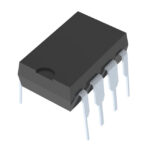 AD22050NZ
The activity of extra discounts on wholesale prices is in full swing…
Please fill in your contact information and we will send you the latest wholesale price list.





