 ChipApex | Global Electronic Components Supplier
SEARCH
Search Product
Search Post
— IC芯片 | 连接器 | 传感器 | 被动器件 —
Search productSearch post
— IC芯片 | 连接器 | 传感器 | 被动器件 —
Consult the customer manager about the wholesale price.
consultation hotline:86-132-6715-2157
email:[email protected]
Contact the product manager for consultation. One-stop consultation is available.
Do you want a lower wholesale price? Please send us your inquiry and we will reply immediately.
The AD238AN is a CMOS RS-232 line transceiver designed for EIA-232-E and V.28 communications interfaces. It integrates four drivers and four receivers on a single chip, powered by a single +5 V supply. The device utilizes internal charge pumps to generate the required ±10 V output swings from the single supply voltage. It supports data rates up to 120 kb/s and operates within an industrial temperature range of -40 °C to +85 °C. The component is housed in a 24-pin Ceramic Dual In-Line Package (CDIP) with glass-sealed construction.
Verify the specific suffix 'AN' against official Analog Devices documentation to confirm pinout compatibility and package dimensions. Ensure that the ceramic DIP form factor aligns with the target PCB footprint, as surface-mount alternatives exist within the same family. Confirm RoHS compliance status if required by the end application, noting that older ceramic packages may have different regulatory classifications than modern plastic variants.
Select this component when high reliability and environmental sealing are prioritized over board space efficiency. The ceramic package offers superior protection against moisture and mechanical stress compared to plastic equivalents. Consider the ADM238 series if a transition from legacy MAXIM or ADI parts is needed, ensuring that the external capacitor requirements match the design constraints. Verify that the 120 kb/s speed meets the system's baud rate requirements.
The AD238 belongs to the broader ADM2xx/AD2xx family of 5 V-powered CMOS RS-232 transceivers. This family is characterized by its ability to operate without external dual supplies, simplifying power management in single-supply systems. The AD238 specifically represents the ceramic packaged version, often used in military, aerospace, or high-reliability industrial applications where long-term stability and hermetic sealing are critical requirements.
The ADM238LAN serves as a direct functional equivalent in plastic packaging. When substituting, verify that the change from ceramic to plastic package does not violate environmental or mechanical constraints of the assembly. Ensure that the pinout remains identical to avoid PCB redesign.
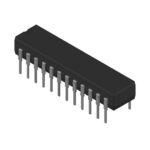 AD238AN
The activity of extra discounts on wholesale prices is in full swing…
Please fill in your contact information and we will send you the latest wholesale price list.





