 ChipApex | Global Electronic Components Supplier
SEARCH
Search Product
Search Post
— IC芯片 | 连接器 | 传感器 | 被动器件 —
Search productSearch post
— IC芯片 | 连接器 | 传感器 | 被动器件 —
Consult the customer manager about the wholesale price.
consultation hotline:86-132-6715-2157
email:[email protected]
Contact the product manager for consultation. One-stop consultation is available.
Do you want a lower wholesale price? Please send us your inquiry and we will reply immediately.
The AD238JR is a CMOS RS-232 line transceiver manufactured by Analog Devices Inc. It integrates four drivers and four receivers within a single SOIC-24 package, supporting full-duplex communication compliant with EIA-232-C and V.28 standards. The device operates at a maximum data rate of 120 kb/s with a propagation delay of 10 us. It requires a single +5 V power supply and draws 15 mA of operating current. The component functions reliably across an industrial temperature range from 0°C to +70°C.
Verify the specific manufacturer source when sourcing this component, as Rochester Electronics distributes versions of the AD238JR. Confirm RoHS compliance status prior to integration, as some distributed variants may not meet current environmental directives. Ensure the SOIC-24 package footprint matches the design layout. Cross-reference the datasheet revision to confirm electrical characteristics align with the target application requirements.
Select the AD238JR for applications requiring four independent RS-232 channels without the need for shutdown modes or ESD protection features. This component is suitable for designs operating strictly within the 0°C to +70°C temperature range. It serves as a direct functional replacement for legacy MAX238 devices in existing schematics. Consider the 120 kb/s data rate limit when designing high-speed serial interfaces.
The AD238JR belongs to the broader family of CMOS RS-232 transceivers designed for +5 V powered systems. These components bridge the gap between TTL/CMOS logic levels and RS-232 signal voltages. The series includes variants with different driver/receiver counts and packaging options. The AD238JR specifically addresses the need for multi-port serial connectivity in compact surface-mount designs.
The MAX238CWG+ is a confirmed public substitute offering identical pinout and functional specifications. Both devices provide four drivers and four receivers in a 24-pin package. Verify that the replacement variant meets the same temperature and voltage requirements before finalizing the swap.
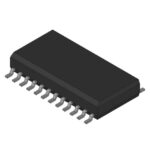 AD238JR
The activity of extra discounts on wholesale prices is in full swing…
Please fill in your contact information and we will send you the latest wholesale price list.





