 ChipApex | Global Electronic Components Supplier
SEARCH
Search Product
Search Post
— IC芯片 | 连接器 | 传感器 | 被动器件 —
Search productSearch post
— IC芯片 | 连接器 | 传感器 | 被动器件 —
Consult the customer manager about the wholesale price.
consultation hotline:86-132-6715-2157
email:[email protected]
Contact the product manager for consultation. One-stop consultation is available.
Do you want a lower wholesale price? Please send us your inquiry and we will reply immediately.
The AD537KD is a monolithic voltage-to-frequency converter manufactured by Analog Devices Inc. It integrates a high-impedance input amplifier, a precision oscillator system, an accurate internal reference generator, and a high-current output stage. The device operates on a single power supply ranging from 4.5 V to 36 V with a typical static current of 1.2 mA. It supports a maximum full-scale frequency of 100 kHz and accepts full-scale input voltages up to ±30 V. The component achieves a linearity error of ±0.05% at a 10 kHz full-scale frequency, ensuring a dynamic range exceeding 80 dB. It features a temperature coefficient of ±30 ppm/°C and provides a square wave output capable of driving multiple TTL loads.
Verify the specific suffix designation against official manufacturer documentation to confirm exact performance grades and temperature ranges. Confirm package type compatibility with intended PCB layout requirements. Ensure supply chain sources provide valid traceability records for military-grade specifications if applicable. Check current product status as distribution availability may vary due to lifecycle management policies.
Select this component when high linearity and wide dynamic range are required for voltage-to-frequency conversion tasks. Consider the single-supply operation and low power consumption for battery-constrained or efficiency-sensitive designs. Evaluate the integrated reference and oscillator stability for applications demanding minimal external component count. Verify that the available temperature grades meet the environmental operating conditions of the target system.
The AD537 series represents a family of high-performance voltage-to-frequency converters designed for precision measurement applications. The KD variant specifically denotes a military-grade version housed in a hermetically sealed ceramic dual in-line package. This packaging ensures reliability under harsh environmental conditions and strict thermal cycling requirements defined by military standards.
Consult official manufacturer substitution guides for verified equivalent part numbers. Cross-reference pin configurations and electrical parameters before implementing any alternative components.
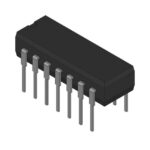 AD537KD/+
The activity of extra discounts on wholesale prices is in full swing…
Please fill in your contact information and we will send you the latest wholesale price list.





