 ChipApex | Global Electronic Components Supplier
SEARCH
Search Product
Search Post
— IC芯片 | 连接器 | 传感器 | 被动器件 —
Search productSearch post
— IC芯片 | 连接器 | 传感器 | 被动器件 —
Consult the customer manager about the wholesale price.
consultation hotline:86-132-6715-2157
email:[email protected]
Contact the product manager for consultation. One-stop consultation is available.
Do you want a lower wholesale price? Please send us your inquiry and we will reply immediately.
The AD5934YRSZ is a high-precision impedance converter system solution manufactured by Analog Devices Inc. It integrates an on-board Direct Digital Synthesis (DDS) frequency generator with a 12-bit, 250 kSPS analog-to-digital converter (ADC). The device excites external complex impedances with known frequencies and processes the response signals using an internal DSP engine to perform Discrete Fourier Transform (DFT). This yields real and imaginary data words for calculating impedance magnitude and phase. Key specifications include a maximum output frequency of 100 kHz, 27-bit frequency resolution, and operation within a 2.7 V to 5.5 V supply range across temperatures from -40°C to +125°C.
Verify the specific suffix YRSZ corresponds to the SSOP-16 package and industrial temperature grade (-40°C to +125°C). Confirm that the MCLK pin requires an external master clock source, as the AD5934 lacks an internal oscillator unlike the AD5933. Ensure the design accounts for the mandatory external feedback resistor connected between RFB and VIN pins to set the receive stage gain.
Select the AD5934YRSZ when an external clock source is available and a sampling rate of 250 kSPS is sufficient. Note that this model differs from the AD5933 by requiring an external MCLK and lacking an integrated temperature sensor. Verify that the target impedance range falls within 1 kΩ to 10 MΩ, or confirm if additional buffer circuitry is required for measurements below 1 kΩ.
The AD5934 is part of the AD5933/AD5934 family of impedance converters. While functionally similar to the AD5933, it is distinguished by its reliance on an external master clock and a reduced sampling rate of 250 kSPS compared to the AD5933's 1 MSPS. Both devices share the same 16-lead SSOP package and core DDS architecture but serve slightly different timing and integration requirements in system designs.
The AD5933YRSZ is a related component but requires modification for direct replacement due to architectural differences. The AD5933 includes an internal oscillator and supports 1 MSPS sampling, whereas the AD5934 mandates an external MCLK signal. Designers must adjust clock generation circuits and software drivers when migrating between these two variants.
No, the AD5934 does not have an internal oscillator. It requires an external master clock signal to be supplied to the MCLK pin for operation.
The standard impedance measurement range is from 1 kΩ to 10 MΩ. Measurements from 100 Ω to 1 kΩ are possible but require additional external buffer circuitry.
The magnitude is calculated using the real (R) and imaginary (I) data words returned by the onboard DFT engine, typically using the formula: Magnitude = sqrt(R^2 + I^2).
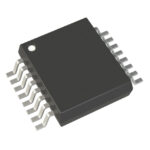 AD5934YRSZ
The activity of extra discounts on wholesale prices is in full swing…
Please fill in your contact information and we will send you the latest wholesale price list.





