 ChipApex | Global Electronic Components Supplier
SEARCH
Search Product
Search Post
— IC芯片 | 连接器 | 传感器 | 被动器件 —
Search productSearch post
— IC芯片 | 连接器 | 传感器 | 被动器件 —
Consult the customer manager about the wholesale price.
consultation hotline:86-132-6715-2157
email:[email protected]
Contact the product manager for consultation. One-stop consultation is available.
Do you want a lower wholesale price? Please send us your inquiry and we will reply immediately.
The AD630KN is a high-precision balanced modulator and demodulator featuring a flexible commutating architecture. It utilizes laser-wafer-trimmed thin-film resistors to ensure exceptional accuracy and temperature stability. The device integrates an application resistor network that provides precise closed-loop gains of ±1 and ±2, with a specified accuracy of 0.05% for the AD630B variant. This internal configuration allows the chip to function as a multiplexer with configurable gains of 1, 2, 3, or 4. The architecture supports complex switching feedback topologies and minimizes switch distortion through fast comparator response and linear amplifier characteristics.
Verify the specific suffix (KN) against official Analog Devices documentation to confirm package type, temperature grade, and compliance status. Ensure the ordering part number matches the required gain accuracy specifications, such as the 0.05% tolerance associated with the B-grade variant. Cross-reference the datasheet for pinout compatibility and power supply requirements before integration.
Select this component when designing systems that require extraction of微弱 signals from significant noise backgrounds, specifically where a 100 dB dynamic range is necessary. It is suitable for frequencies up to several hundred kilohertz, though optimized for operation below 1 kHz. Consider its op-amp-like architecture if complex feedback networks or high-gain switching are required within the signal path.
The AD630 series represents a class of precision analog signal processing devices designed to bridge the gap between standard integrated circuits and expensive specialized instruments. By integrating the modulation/demodulation core with precision amplifier stages, it eliminates the need for separate discrete components typically required in synchronous detection setups, simplifying circuit design while maintaining high fidelity.
Consult official Analog Devices substitution guides for verified equivalents. Generic modulators may not replicate the laser-trimmed resistor accuracy or the specific commutating architecture required for low-distortion performance.
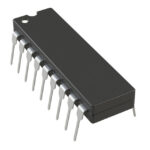 AD630KN
The activity of extra discounts on wholesale prices is in full swing…
Please fill in your contact information and we will send you the latest wholesale price list.





