 ChipApex | Global Electronic Components Supplier
SEARCH
Search Product
Search Post
— IC芯片 | 连接器 | 传感器 | 被动器件 —
Search productSearch post
— IC芯片 | 连接器 | 传感器 | 被动器件 —
Consult the customer manager about the wholesale price.
consultation hotline:86-132-6715-2157
email:[email protected]
Contact the product manager for consultation. One-stop consultation is available.
Do you want a lower wholesale price? Please send us your inquiry and we will reply immediately.
The AD8016ARB is a dual high-output current xDSL line driver designed for ADSL, HDSL2, and VDSL central office applications. It operates from ±3 V to ±13 V supplies with a typical quiescent current of 12.5 mA per amplifier at full bias. The device delivers up to 600 mA linear output current and achieves a 78 MHz bandwidth at a gain of +5. Key performance metrics include a 1000 V/μs slew rate, –75 dBc single-tone SFDR at 1 MHz, and a Multitone Power Ratio (MTPR) of –75 dBc across the 26 kHz to 1.1 MHz frequency range.
Verify the specific package variant against the ordering guide, as the AD8016 is available in both 24-lead SOIC_W_BAT and 28-lead TSSOP_EP configurations. Confirm that the selected part matches the required thermal dissipation characteristics for the intended PCB layout. Ensure compatibility with CMOS-compatible logic levels for the power-down control pins. Check for any revision history updates regarding pinout or electrical specifications before finalizing procurement.
Select the AD8016 when high output current and low distortion are critical for driving xDSL hybrid transformers. The device supports flexible power reduction modes to optimize efficiency in customer premise equipment or central office deployments. Designers must carefully select feedback resistors to maintain stability and optimal MTPR performance. Consider the exposed paddle on the TSSOP_EP package for thermal management, although it is not electrically connected internally.
The AD8016 series consists of dual amplifiers specifically engineered for digital subscriber line interfaces. It replaces discrete solutions by integrating high-current output stages and power management logic into a single monolithic component. This integration reduces board space and simplifies the design of robust line drivers for broadband access networks requiring high linearity and efficient power usage.
Public confirmed substitutes include the STLC60133 and MAX4142. Verify that alternative devices support the required output current and supply voltage ranges. Ensure that the replacement maintains compatibility with the existing power-down control logic and thermal management requirements of the xDSL application.
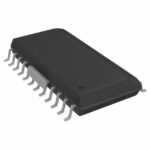 AD8016ARB
The activity of extra discounts on wholesale prices is in full swing…
Please fill in your contact information and we will send you the latest wholesale price list.





