 ChipApex | Global Electronic Components Supplier
SEARCH
Search Product
Search Post
— IC芯片 | 连接器 | 传感器 | 被动器件 —
Search productSearch post
— IC芯片 | 连接器 | 传感器 | 被动器件 —
Consult the customer manager about the wholesale price.
consultation hotline:86-132-6715-2157
email:[email protected]
Contact the product manager for consultation. One-stop consultation is available.
Do you want a lower wholesale price? Please send us your inquiry and we will reply immediately.
The AD8324JRQZ-REEL is a low-cost, single-channel line driver designed for coaxial cable applications. It operates from a single 3.13 V to 3.47 V supply with a typical quiescent current of 207 mA at maximum gain. The device provides a voltage gain range of 59 dB, adjustable in 1 dB steps via an SPI interface. It maintains a differential output impedance of 75 Ω and supports an upper bandwidth of 100 MHz across the full gain range.
Verify that the ordering suffix REEL indicates tape and reel packaging configuration. Confirm the specific package variant matches design requirements, as the AD8324 family includes LFCSP and QSOP options with different thermal and temperature characteristics. Ensure compatibility with existing SPI logic levels and verify component authenticity through authorized distribution channels.
Select this component for upstream cable line driving where digital gain adjustment is required. The device is suitable for designs needing fixed 75 Ω output impedance without external termination resistors. Consider the operating temperature range limits when choosing between package types, as the QSOP variant has a restricted commercial temperature range compared to industrial grade alternatives.
The AD8324 is a specialized amplifier within the Analog Devices portfolio, engineered specifically for cable modem upstream paths. It integrates a vernier attenuator core and output stage optimized for low distortion at high output levels. The part serves as a cost-effective solution for meeting strict RF interface specifications in residential gateway hardware.
Public documentation confirms the AD8324JRQZ as a valid substitute for the AD8324JRQZ-REEL, differing only in shipping format rather than electrical function. Verify pinout compatibility and thermal resistance values when transitioning between LFCSP and QSOP packages in existing layouts.
The device maintains a differential output impedance of 75 ± 30% Ω regardless of whether it is in transmit enable, transmit disable, or sleep mode.
The RAMP pin controls the duration of burst on/off transients. Leaving it unconnected ensures compliance with DOCSIS 2.0 spurious emission requirements by dissipating transients no faster than 2 µs.
Gain is programmed via an SPI interface using an 8-bit serial word loaded MSB first. The gain code ranges from 1 to 60, providing a 59 dB range with 1 dB/LSB steps.
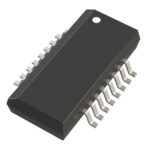 AD8324JRQZ-REEL
The activity of extra discounts on wholesale prices is in full swing…
Please fill in your contact information and we will send you the latest wholesale price list.





