 ChipApex | Global Electronic Components Supplier
SEARCH
Search Product
Search Post
— IC芯片 | 连接器 | 传感器 | 被动器件 —
Search productSearch post
— IC芯片 | 连接器 | 传感器 | 被动器件 —
Consult the customer manager about the wholesale price.
consultation hotline:86-132-6715-2157
email:[email protected]
Contact the product manager for consultation. One-stop consultation is available.
Do you want a lower wholesale price? Please send us your inquiry and we will reply immediately.
The AD8350ARM15 is a high-performance, fully-differential amplifier from Analog Devices, designed for RF and IF circuits up to 1 GHz. It features a fixed gain of 15 dB, a -3 dB bandwidth of 1.0 GHz, and an output third-order intercept point (OIP3) of +28 dBm at 250 MHz. The device operates on a single supply voltage ranging from 5 V to 10 V with a typical supply current of 28 mA. It offers a low noise figure of 5.9 dB at 250 MHz and supports both single-ended and differential input drive configurations.
Verify the specific suffix and package type when ordering, as the AD8350 series includes variants with different gain settings and packaging options. Confirm that the required 15 dB gain version matches the design specifications. Check for RoHS compliance status and ensure the MSOP-8 or SOIC-8 package availability aligns with the PCB layout requirements. Cross-reference the manufacturer part number with distributor listings to confirm current production status and lead times.
Select this component when a fixed 15 dB gain is required for high-frequency differential signal processing. Compare against the AD8350-20 variant if a higher gain setting is needed. Ensure the system can accommodate the 5 V to 10 V single-supply operation and 28 mA current consumption. Consider the 200 Ω input/output impedance for matching purposes in RF and IF stages.
The AD8350ARM15 belongs to the AD8350 series of fully-differential amplifiers engineered for high-speed data transmission and video applications. It is part of Analog Devices' portfolio aimed at enabling high dynamic range differential signal chains. The series is optimized for communications transceivers, providing a balance of bandwidth, linearity, and noise performance essential for modern wireless infrastructure.
The AD8350ARM20 serves as a direct functional alternative within the same series, offering a 20 dB gain instead of 15 dB while maintaining identical bandwidth and power characteristics. Other family members may share the same package but differ in gain configuration; verify the gain specification before substitution.
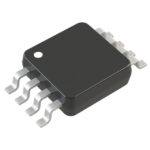 AD8350ARM15
The activity of extra discounts on wholesale prices is in full swing…
Please fill in your contact information and we will send you the latest wholesale price list.






