 ChipApex | Global Electronic Components Supplier
AD9559BCPZ-REEL7
Search Product
Search Post
— IC芯片 | 连接器 | 传感器 | 被动器件 —
Search productSearch post
— IC芯片 | 连接器 | 传感器 | 被动器件 —
Consult the customer manager about the wholesale price.
consultation hotline:86-132-6715-2157
email:[email protected]
Contact the product manager for consultation. One-stop consultation is available.
Do you want a lower wholesale price? Please send us your inquiry and we will reply immediately.
The AD9559BCPZ-REEL7 is a dual PLL, quad input multiservice line card adaptive clock translator in a 72-lead LFCSP-VQ package. It supports Stratum 3 stability and Telcordia GR-253 jitter generation for SONET/SDH up to OC-192. The device features a 4x2 crosspoint allowing any of four reference inputs (LVDS/LVPECL) to drive either digital PLL. Output frequencies range from 262 kHz to 1250 MHz with configurable HSTL, LVDS, or CMOS drivers. Operating voltage is 1.71 V to 3.465 V across an industrial temperature range of -40°C to +85°C.
Verify the REEL7 suffix indicates tape-and-reel packaging rather than tray packaging when sourcing components. Confirm that the specific revision matches the required datasheet version for compatibility with existing system designs. Ensure supply chain sources provide valid traceability documentation for Analog Devices Inc. products.
Select this component for applications requiring low loop bandwidth clock multiplication and synchronization across multiple protocols. The dual PLL design allows independent operation for different network segments. Consider the 72-LFCSP-VQ package dimensions for PCB layout constraints. Verify that the input reference frequencies fall within the 2 kHz to 1250 MHz operational range.
This part belongs to the AD9559 family of adaptive clock translators designed for multiservice line cards. It serves as a specialized solution for high-performance network synchronization where jitter tolerance and holdover accuracy are critical. The device integrates both digital and analog PLL functionalities to ensure robust clock distribution in complex telecommunication environments.
For single PLL requirements, consider the AD9557. Other family members include the AD9558 and AD9554-1 for varying input/output configurations. Verify pinout and register compatibility before substituting with other devices in the AD955x series.
The device supports output frequencies ranging from 262 kHz to 1250 MHz depending on the configured output driver mode.
It utilizes digitally controlled loop and holdover circuitry to continuously generate a low jitter output clock even when all reference inputs have failed, supporting Stratum 3 stability.
Yes, the device supports ITU-T G.8262 synchronous Ethernet node clocks in addition to SONET/SDH standards.
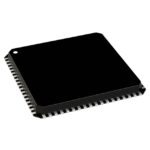 AD9559BCPZ-REEL7
The activity of extra discounts on wholesale prices is in full swing…
Please fill in your contact information and we will send you the latest wholesale price list.