 ChipApex | Global Electronic Components Supplier
SEARCH
Search Product
Search Post
— IC芯片 | 连接器 | 传感器 | 被动器件 —
Search productSearch post
— IC芯片 | 连接器 | 传感器 | 被动器件 —
Consult the customer manager about the wholesale price.
consultation hotline:86-132-6715-2157
email:[email protected]
Contact the product manager for consultation. One-stop consultation is available.
Do you want a lower wholesale price? Please send us your inquiry and we will reply immediately.
The AD9660KR is a highly integrated laser diode driver designed for optical disk drives, printers, and copiers. It features onboard light power control loops that utilize feedback from an external photodetector to manage bias and write power levels. The device supports switching between power levels at up to 200 MHz. Key electrical specifications include output rise and fall times of typically 1.5 ns and 2.0 ns, respectively. It operates on a single +5 V power supply, delivering an output current of 180 mA at 3 V or 200 mA at 2.5 V. Bias current is specified at 90 mA at 3 V, with modulation and offset currents at 60 mA and 30 mA, respectively.
Verify the specific suffix KR against the manufacturer's official datasheet to confirm package type and temperature range. Ensure compatibility with the required single +5 V supply voltage. Confirm that the external photodetector interface aligns with the onboard feedback loop requirements. Check for any RoHS compliance documentation relevant to the manufacturing date code.
Select this component when designing systems that require precise laser diode power control with high-speed modulation capabilities. It is suitable for applications demanding fast rise and fall times to support advanced imaging techniques. Consider the single +5 V supply constraint and the need for an external photodetector for the feedback loops. Evaluate if the 200 MHz switching rate meets the system's data transmission or printing speed requirements.
The AD9660KR belongs to Analog Devices' family of laser diode drivers. This series is engineered for high-performance optical applications where stability and speed are critical. The KR suffix typically denotes a specific package variant within the AD9660 product line, ensuring physical compatibility with standard PCB layouts for optical drive and printer modules.
Review the AD96606 and AD9660KR-REEL variants listed in similar part databases. Verify pinout compatibility and electrical specifications before substitution. Ensure the alternative part supports the same 200 MHz switching rate and onboard feedback loop functionality.
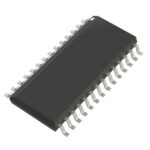 AD9660KR
The activity of extra discounts on wholesale prices is in full swing…
Please fill in your contact information and we will send you the latest wholesale price list.





