 ChipApex | Global Electronic Components Supplier
SEARCH
Search Product
Search Post
— IC芯片 | 连接器 | 传感器 | 被动器件 —
Search productSearch post
— IC芯片 | 连接器 | 传感器 | 被动器件 —
Consult the customer manager about the wholesale price.
consultation hotline:86-132-6715-2157
email:[email protected]
Contact the product manager for consultation. One-stop consultation is available.
Do you want a lower wholesale price? Please send us your inquiry and we will reply immediately.
The AD9953YSVZ is a direct digital synthesizer (DDS) featuring an integrated 14-bit DAC operating at up to 400 MSPS. It generates frequency-agile analog output sinusoidal waveforms up to 200 MHz using advanced DDS technology. The device includes a 1024 × 32 static RAM for flexible frequency sweep capabilities and supports fast frequency hopping with fine tuning resolution via a 32-bit frequency tuning word. Control words are loaded through a serial I/O port. The component operates on a 1.8 V power supply, supports DVDD_I/O of 1.8 V or 3.3 V, and functions within an extended industrial temperature range of –40°C to +105°C.
Verify the specific ordering suffix against the manufacturer's official documentation to confirm package type and temperature grade. Ensure that the DVDD_I/O voltage level matches the intended logic interface requirements before integration. Confirm compliance with RoHS directives as specified in the latest datasheet revision. Cross-reference the part number with authorized distributors to validate authenticity and traceability.
Select this component when high-speed frequency agility and low phase noise are required in a single-chip solution. The internal RAM allows for complex waveform generation without external memory overhead. Consider the 48-lead TQFP package constraints for PCB layout, particularly regarding analog ground separation. Evaluate the need for external loop filter components if utilizing the internal PLL multiplier for jitter reduction.
The AD9953 belongs to Analog Devices' family of high-performance direct digital synthesizers designed for demanding RF applications. It shares architectural similarities with the AD9954 and AD9952 but offers specific performance characteristics tailored for VHF/UHF synthesis. The YSVZ suffix denotes the commercial/industrial temperature variant housed in a 48-lead TQFP package with an exposed paddle for thermal management and grounding.
The AD9954 serves as a pin-compatible alternative within the same series, offering similar functionality with potentially different optimization parameters. Verify register compatibility and electrical specifications before substitution. No other direct substitutes are confirmed in public documentation.
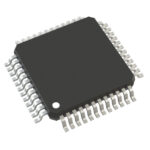 AD9953YSVZ
The activity of extra discounts on wholesale prices is in full swing…
Please fill in your contact information and we will send you the latest wholesale price list.





